Pest Control in Southern Pines, NC
Southern Pines anchors the heart of Moore County's Sandhills tri-cities alongside neighboring Pinehurst and Aberdeen. With a population of about 16,000, Southern Pines blends small-town charm with the sophisticated golf and equestrian culture the Sandhills are known for — from the historic shops along Broad Street to the miles of horse trails threading through longleaf pine forests. The same sandy Sandhills soils and longleaf ecosystem that define the area's character also create distinctive pest conditions: fire ants thrive in the loose sand, the well-drained surface masks subsurface moisture that sustains termite colonies, and the surrounding forests support wildlife populations that carry ticks and fleas into residential areas. Our Fayetteville office serves Southern Pines and the Moore County Sandhills communities.
Home Pest Control in Southern Pines
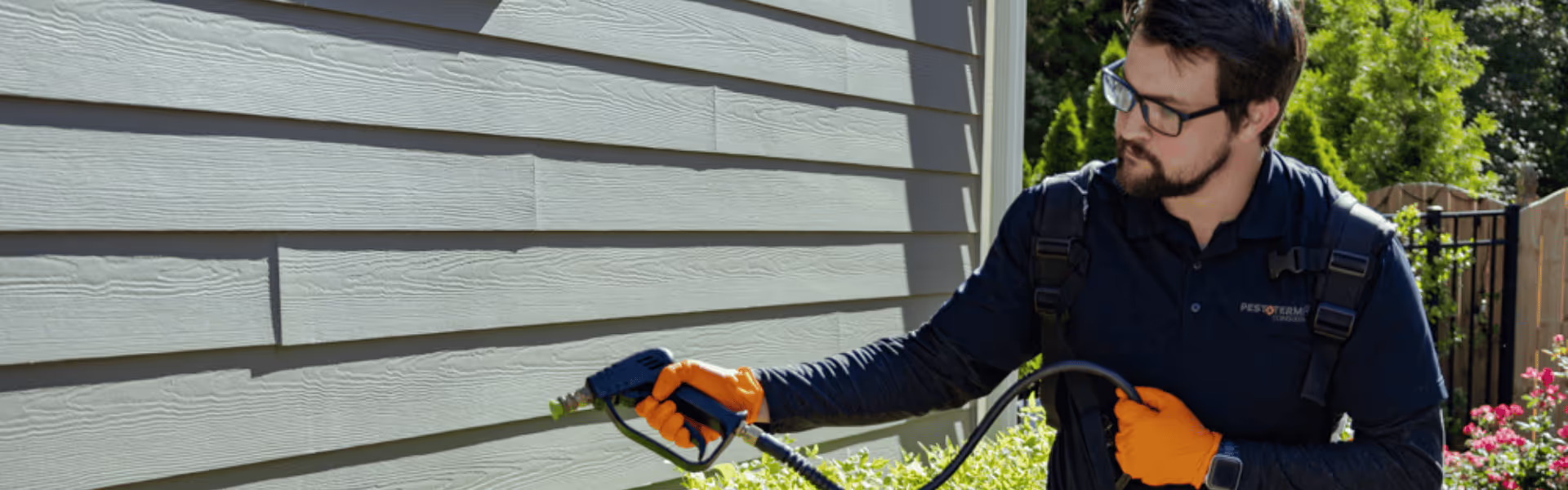
Southern Pines homeowners face pest pressures driven by the Sandhills' distinctive sandy soils and the surrounding longleaf pine ecosystem. The town's mix of historic homes along Connecticut Avenue and New England-style neighborhoods near downtown, mid-century ranch homes, and newer golf course communities each present different pest vulnerabilities. Weymouth Woods-Sandhills Nature Preserve's 900 acres of old-growth longleaf pine forest borders residential areas and supports the wildlife that brings ticks and fleas into yards. Our residential pest control program provides quarterly treatments calibrated to the specific pest conditions that Sandhills properties experience throughout the year.
Termite Control in Southern Pines
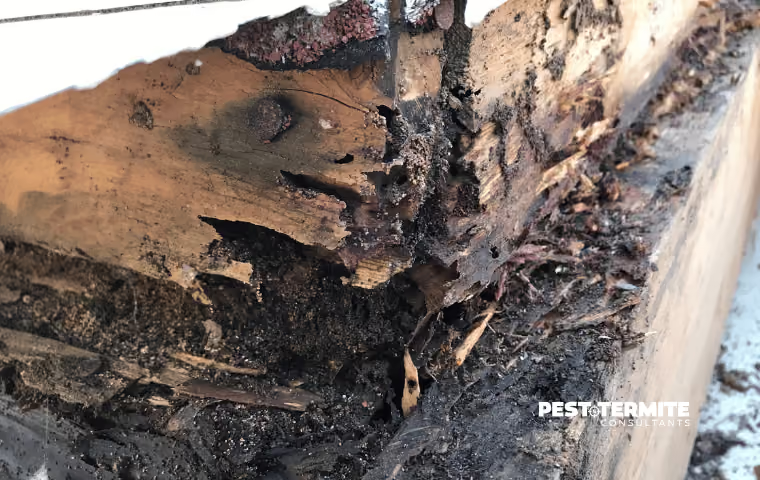
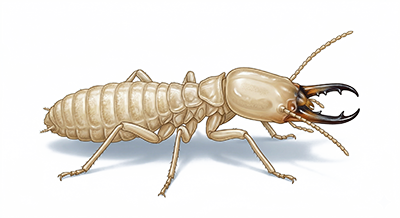
The Sandhills' sandy soils create deceptively favorable conditions for subterranean termites. While the sand drains surface water quickly, the clay sublayer beneath retains enough moisture for termite colonies to thrive, and the extensive irrigation of surrounding golf courses and residential landscapes adds artificial moisture to the soil profile. Southern Pines' older homes with original wood framing and properties landscaped with pine straw mulch — aesthetically appropriate but moisture-retaining near foundations — face elevated termite risk. Our termite control services include thorough inspections, liquid barrier treatments optimized for sandy soil conditions, and monitoring systems that detect termite activity before it causes costly structural damage.
Mosquito Control in Southern Pines
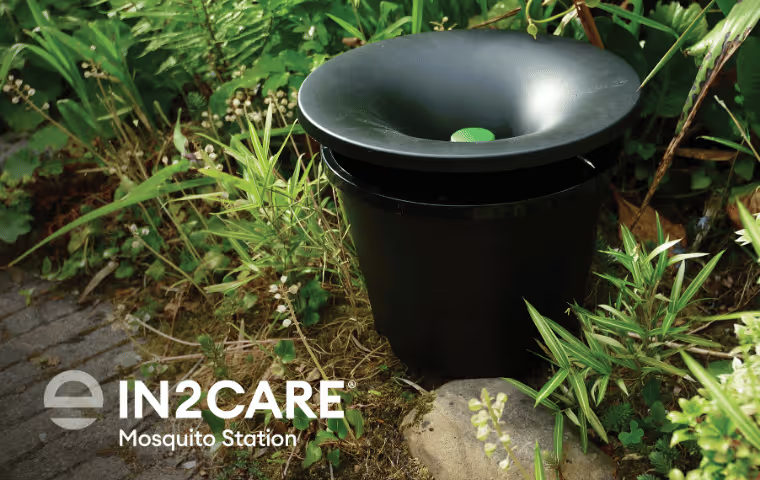
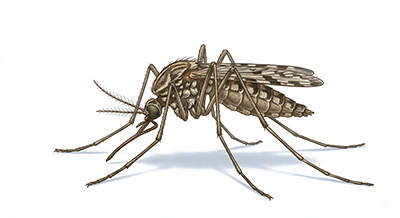
Despite the Sandhills' well-drained sandy surface soils, Southern Pines deals with significant mosquito pressure from multiple sources. Aberdeen Creek and its tributaries flow through the area, the ornamental ponds and water features on golf courses and in planned communities provide breeding habitat, and the extensive landscape irrigation keeps soil moist enough to sustain mosquito populations. James Creek and its headwaters near town add natural breeding corridors. Our mosquito reduction program targets the breeding sites and adult resting areas on your property to create a comfortable outdoor environment during the warm months.
Rodent Control in Southern Pines
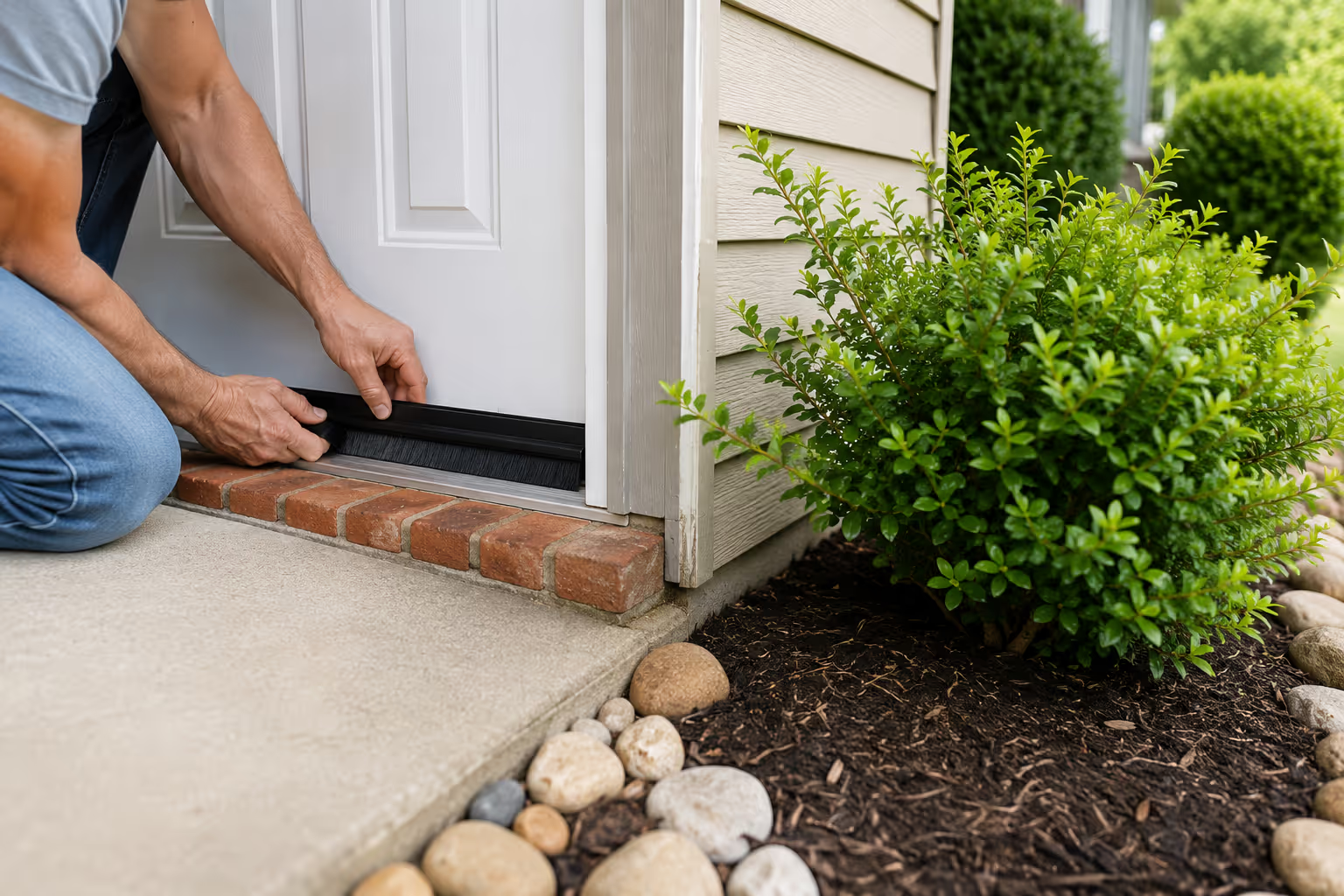
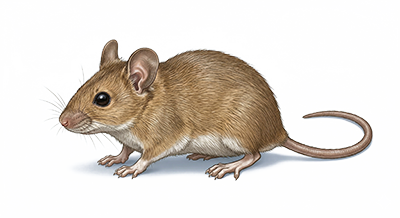
The longleaf pine forests surrounding Southern Pines support diverse wildlife populations including squirrels, raccoons, and rodents that venture into residential areas. Properties backing onto Weymouth Woods or other wooded tracts are particularly susceptible to wildlife intrusion, and the equestrian properties throughout the area can attract rodents to feed storage areas. Older homes in the downtown and Connecticut Avenue neighborhoods may have construction gaps that provide easy entry. Our rodent control services include comprehensive inspections, professional exclusion work, and targeted trapping programs designed for the specific wildlife and rodent challenges Southern Pines properties face.


Local Pest Insights for Southern Pines, NC
Southern Pines shares the Sandhills geology with neighboring Pinehurst — the wind-blown Quaternary sand sheets that create the distinctive sandy soils underlying the region. But Southern Pines has a slightly different character: while Pinehurst was designed as a resort village, Southern Pines grew as a working community with a historic downtown, active railroad corridor, and a more diverse mix of housing from 1880s Victorian homes to modern golf course communities. This variety in construction age and type means pest vulnerabilities differ significantly from one neighborhood to the next.
The Weymouth Woods-Sandhills Nature Preserve on the southeast edge of town preserves 900 acres of old-growth longleaf pine forest — one of the finest remaining examples of the original Sandhills ecosystem. While ecologically valuable, this preserved habitat supports the deer, fox, and turkey populations that bring lone star ticks and deer ticks into adjacent residential areas. The equestrian culture that defines Southern Pines adds another pest dimension: horse farms and stables attract flies, ticks, and rodents drawn to feed storage, and properties near equestrian facilities may experience elevated pest pressure from these sources.
Why Choose Pest & Termite Consultants in Southern Pines?
The Sandhills require pest management that accounts for the region's unique sandy soils, extensive irrigation, and diverse housing stock. A Victorian home near downtown needs a different approach than a contemporary home backing onto a golf course fairway, and both differ from a rural property with equestrian facilities. Our technicians understand these Sandhills-specific variables and design treatment plans that address your property's actual conditions — soil type, construction age, proximity to irrigated areas or natural habitat, and surrounding land use — rather than applying a generic program.
Additional Pest Control Services in Southern Pines
Southern Pines' vibrant downtown along Broad Street, the restaurants and shops that serve the Sandhills community, and the equestrian and hospitality operations throughout the area all require professional pest management. Our commercial pest control services provide code-compliant programs for restaurants, retail businesses, hospitality properties, healthcare facilities, and equestrian operations throughout Southern Pines and Moore County.
Service Areas Near Southern Pines
From our Fayetteville office, we serve Southern Pines and the surrounding Moore County communities including Pinehurst, Aberdeen, Whispering Pines, Foxfire, Taylortown, and Vass. We also serve Fayetteville, Raeford, and communities along the US-1 and US-15/501 corridors.
Frequently Asked Questions About Pest Control in Southern Pines
How is Southern Pines different from Pinehurst for pest control?
While Southern Pines and Pinehurst share the same Sandhills geology and fire ant/termite pressures, Southern Pines has a wider range of housing types — from 1880s Victorian homes near downtown to newer construction in golf course communities. The older homes present different pest vulnerabilities (aging foundations, original wood framing, crawl spaces without modern barriers) than the newer homes (construction-displaced pests, landscaping-related issues). Southern Pines also has more commercial diversity and an active railroad corridor, which can introduce different pest dynamics than Pinehurst's primarily residential and resort environment.
Does Weymouth Woods affect pest pressure in nearby neighborhoods?
Yes. The 900 acres of old-growth longleaf pine forest at Weymouth Woods preserve support healthy deer, fox, turkey, and small mammal populations that carry ticks and fleas into adjacent residential areas. If you live near the preserve boundary — particularly along Fort Bragg Road or in neighborhoods southeast of downtown — you may experience higher tick and wildlife-related pest pressure. Regular yard treatments and perimeter spraying can significantly reduce tick encounters on your property.
Are fire ants as bad in Southern Pines as they are in Pinehurst?
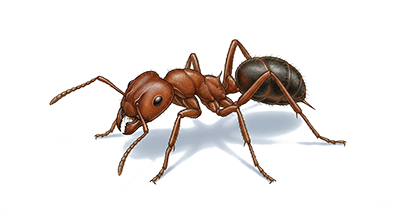
Yes — the same sandy Sandhills soils that make fire ants a persistent problem in Pinehurst create identical conditions in Southern Pines. Fire ants build mounds aggressively in loose sand, and they can appear in yards, along walkways, and near play areas. The key to managing fire ants in sandy soil is consistent quarterly treatment rather than chasing individual mounds, which only provides temporary relief as colonies quickly re-establish in the loose sand.
What pest concerns come with equestrian properties?
Southern Pines' strong equestrian culture means many properties are near horse farms, stables, or training facilities. Equestrian properties attract specific pests: flies drawn to manure and organic matter, rodents attracted to feed storage, ticks carried by horses and the deer that graze in horse pastures, and carpenter bees targeting wooden barn and fence structures. If your property is near equestrian operations, your pest management plan should account for these neighboring pest sources.
Should I worry about termites with pine straw mulch?
Pine straw mulch is the standard landscape material in the Sandhills and is aesthetically appropriate for the longleaf pine setting. While pine straw itself doesn't attract termites, it retains moisture against foundations and can provide a bridge between soil and wood elements of your home. We recommend maintaining a 4-6 inch gap between mulch and foundation walls and ensuring mulch doesn't cover weep holes or foundation vents. Our inspections always evaluate mulch placement as part of the termite risk assessment.
How far is your office from Southern Pines?
Our Fayetteville office is approximately 40 miles from Southern Pines via US-1, typically a 40-45 minute drive. We serve the Southern Pines, Pinehurst, and Aberdeen area on a regular route schedule and can accommodate urgent requests with priority scheduling for active infestations or emergency pest situations.
Ready to protect your Southern Pines home or business from pests? Contact Pest & Termite Consultants today or call our Fayetteville office at (910) 781-8980 to schedule your free inspection.
Local Pest Insights for Southern Pines, NC
Southern Pines shares the Sandhills geology with neighboring Pinehurst — the wind-blown Quaternary sand sheets that create the distinctive sandy soils underlying the region. But Southern Pines has a slightly different character: while Pinehurst was designed as a resort village, Southern Pines grew as a working community with a historic downtown, active railroad corridor, and a more diverse mix of housing from 1880s Victorian homes to modern golf course communities. This variety in construction age and type means pest vulnerabilities differ significantly from one neighborhood to the next.
The Weymouth Woods-Sandhills Nature Preserve on the southeast edge of town preserves 900 acres of old-growth longleaf pine forest — one of the finest remaining examples of the original Sandhills ecosystem. While ecologically valuable, this preserved habitat supports the deer, fox, and turkey populations that bring lone star ticks and deer ticks into adjacent residential areas. The equestrian culture that defines Southern Pines adds another pest dimension: horse farms and stables attract flies, ticks, and rodents drawn to feed storage, and properties near equestrian facilities may experience elevated pest pressure from these sources.
Why Choose Pest & Termite Consultants in Southern Pines?
The Sandhills require pest management that accounts for the region's unique sandy soils, extensive irrigation, and diverse housing stock. A Victorian home near downtown needs a different approach than a contemporary home backing onto a golf course fairway, and both differ from a rural property with equestrian facilities. Our technicians understand these Sandhills-specific variables and design treatment plans that address your property's actual conditions — soil type, construction age, proximity to irrigated areas or natural habitat, and surrounding land use — rather than applying a generic program.
Additional Pest Control Services in Southern Pines
Southern Pines' vibrant downtown along Broad Street, the restaurants and shops that serve the Sandhills community, and the equestrian and hospitality operations throughout the area all require professional pest management. Our commercial pest control services provide code-compliant programs for restaurants, retail businesses, hospitality properties, healthcare facilities, and equestrian operations throughout Southern Pines and Moore County.
Service Areas Near Southern Pines
From our Fayetteville office, we serve Southern Pines and the surrounding Moore County communities including Pinehurst, Aberdeen, Whispering Pines, Foxfire, Taylortown, and Vass. We also serve Fayetteville, Raeford, and communities along the US-1 and US-15/501 corridors.
Frequently Asked Questions About Pest Control in Southern Pines
How is Southern Pines different from Pinehurst for pest control?
While Southern Pines and Pinehurst share the same Sandhills geology and fire ant/termite pressures, Southern Pines has a wider range of housing types — from 1880s Victorian homes near downtown to newer construction in golf course communities. The older homes present different pest vulnerabilities (aging foundations, original wood framing, crawl spaces without modern barriers) than the newer homes (construction-displaced pests, landscaping-related issues). Southern Pines also has more commercial diversity and an active railroad corridor, which can introduce different pest dynamics than Pinehurst's primarily residential and resort environment.
Does Weymouth Woods affect pest pressure in nearby neighborhoods?
Yes. The 900 acres of old-growth longleaf pine forest at Weymouth Woods preserve support healthy deer, fox, turkey, and small mammal populations that carry ticks and fleas into adjacent residential areas. If you live near the preserve boundary — particularly along Fort Bragg Road or in neighborhoods southeast of downtown — you may experience higher tick and wildlife-related pest pressure. Regular yard treatments and perimeter spraying can significantly reduce tick encounters on your property.
Are fire ants as bad in Southern Pines as they are in Pinehurst?
Yes — the same sandy Sandhills soils that make fire ants a persistent problem in Pinehurst create identical conditions in Southern Pines. Fire ants build mounds aggressively in loose sand, and they can appear in yards, along walkways, and near play areas. The key to managing fire ants in sandy soil is consistent quarterly treatment rather than chasing individual mounds, which only provides temporary relief as colonies quickly re-establish in the loose sand.
What pest concerns come with equestrian properties?
Southern Pines' strong equestrian culture means many properties are near horse farms, stables, or training facilities. Equestrian properties attract specific pests: flies drawn to manure and organic matter, rodents attracted to feed storage, ticks carried by horses and the deer that graze in horse pastures, and carpenter bees targeting wooden barn and fence structures. If your property is near equestrian operations, your pest management plan should account for these neighboring pest sources.
Should I worry about termites with pine straw mulch?
Pine straw mulch is the standard landscape material in the Sandhills and is aesthetically appropriate for the longleaf pine setting. While pine straw itself doesn't attract termites, it retains moisture against foundations and can provide a bridge between soil and wood elements of your home. We recommend maintaining a 4-6 inch gap between mulch and foundation walls and ensuring mulch doesn't cover weep holes or foundation vents. Our inspections always evaluate mulch placement as part of the termite risk assessment.
How far is your office from Southern Pines?
Our Fayetteville office is approximately 40 miles from Southern Pines via US-1, typically a 40-45 minute drive. We serve the Southern Pines, Pinehurst, and Aberdeen area on a regular route schedule and can accommodate urgent requests with priority scheduling for active infestations or emergency pest situations.
Ready to protect your Southern Pines home or business from pests? Contact Pest & Termite Consultants today or call our Fayetteville office at (910) 781-8980 to schedule your free inspection.