Why Flying Ants Get Confused With Termites Every Spring in Wilmington
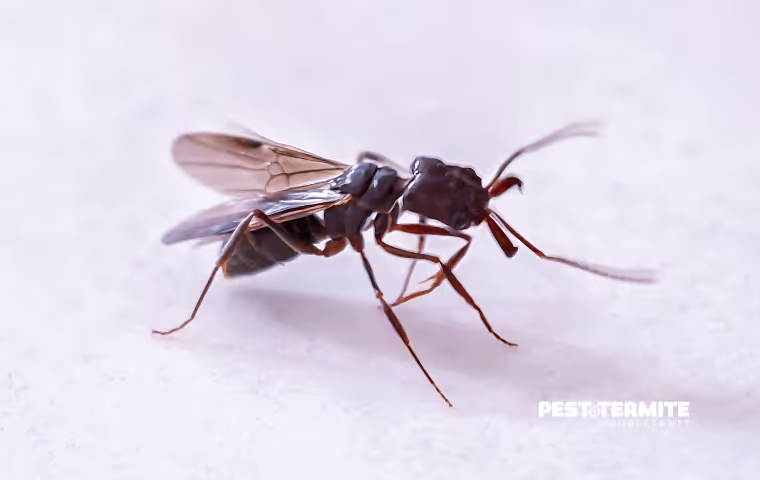
Every spring, homeowners around Wilmington start noticing winged insects around their windows, doors, and light fixtures. The immediate question is usually the same: are these flying ants or termites?
The confusion is common and understandable. Both insects show up around the same time of year, both have wings, and both tend to appear suddenly. Mistaking one for the other can lead to serious consequences, though, especially when termites are involved.
Knowing how to correctly identify these insects can help you determine whether you need termite control or ant control in Wilmington and take the right action early.
Why Flying Ants and Termites Appear at the Same Time
Both flying ants and termite swarmers emerge in spring as part of their reproductive cycle. Warm temperatures, increased moisture, and longer daylight hours trigger colonies to release winged members that go on to start new colonies.
This is why homeowners in Wilmington, Leland, and Ogden often see these insects:
- After rain
- Near windows or light sources
- In sudden groups rather than individually
Since their timing overlaps, it is easy to assume they are the same pest or mix one up for the other.
Key Differences Between Flying Ants and Termites
A few visual details can help you tell what you are looking at.
Body Shape
- Flying ants have a narrow, pinched waist
- Termites have a straight, uniform body
Wings
- Flying ants have two sets of wings that differ in size
- Termites have two sets of wings that are equal in length
Antennae
- Flying ants have bent or elbowed antennae
- Termites have straight antennae
These small details make a real difference when it comes to identifying these pests correctly.
Why Misidentification Leads to Bigger Problems
Flying ants are usually more of a nuisance, while termites can cause serious structural damage. When termite swarmers get mistaken for ants, homeowners sometimes delay action, assuming the problem is minor.
In reality, seeing termite swarmers often means:
- A colony is already established nearby
- Termites have likely been active for months
- Structural wood may already be affected
This is why understanding the difference between flying ants and termites matters so much for early detection.
What to Do If You See Winged Insects Indoors
If you notice flying insects inside your home:
- Check for discarded wings near windows or doors
- Look for mud tubes along foundations or crawlspaces
- Pay attention to repeated sightings in the same area
Even if you are unsure of the identification, it is worth having the situation evaluated early.
Why Termite Inspections Matter in Spring
Spring is one of the most important times for termite awareness. Swarmers are often the first visible sign of a larger issue, not the start of one.
Professional inspections help:
- Confirm whether termites are present
- Identify early signs of damage
- Detect conducive conditions around your home
- Prevent colonies from expanding
Reliable termite control in Wilmington focuses on early detection and prevention, not just reacting after damage appears.
How to Protect Your Home From Termites
If termites are identified, early action matters most. Many homeowners begin searching for how to get rid of termites in Wilmington after swarmers appear, but prevention and monitoring are far more effective than waiting.
Protective steps include:
- Reducing moisture around your home
- Keeping wood away from soil
- Scheduling routine inspections
- Maintaining consistent termite protection
These measures help reduce long-term risk and protect your home's structure.
Termite vs. Ant Identification FAQs in Wilmington
Are flying ants and termites active at the same time?
Yes. Both commonly appear in spring.
Are termites more dangerous than flying ants?
Yes. Termites can cause severe structural damage over time.
Do flying ants damage homes?
Most ant species are simply a nuisance, but carpenter ants do pose a structural threat.
What do termite wings look like?
They are equal in length and often found in small piles after swarming.
Should I be concerned if I see winged insects indoors?
Yes. Indoor sightings should be evaluated by a professional.
How can I confirm if I have termites?
A professional termite inspection is the most reliable way to confirm an infestation.
Do termites go away on their own?
No. Colonies remain active unless treated.
Know the Difference & Act Early
Each spring, homeowners across Wilmington, Leland, and Ogden face the same challenge of identifying flying ants versus termites. They may look similar at a glance, but the difference matters.
Recognizing the warning signs early and knowing how to tell these flying insects apart will help you take the right next step. If termites are present, prompt action and professional termite control can prevent damage and protect your home.
If you are unsure what you are seeing or want peace of mind, call (910) 707-3830 to schedule a termite inspection in Wilmington.