Why Mosquitoes Can Still Be a Problem Well Into Early Fall Near North Myrtle Beach

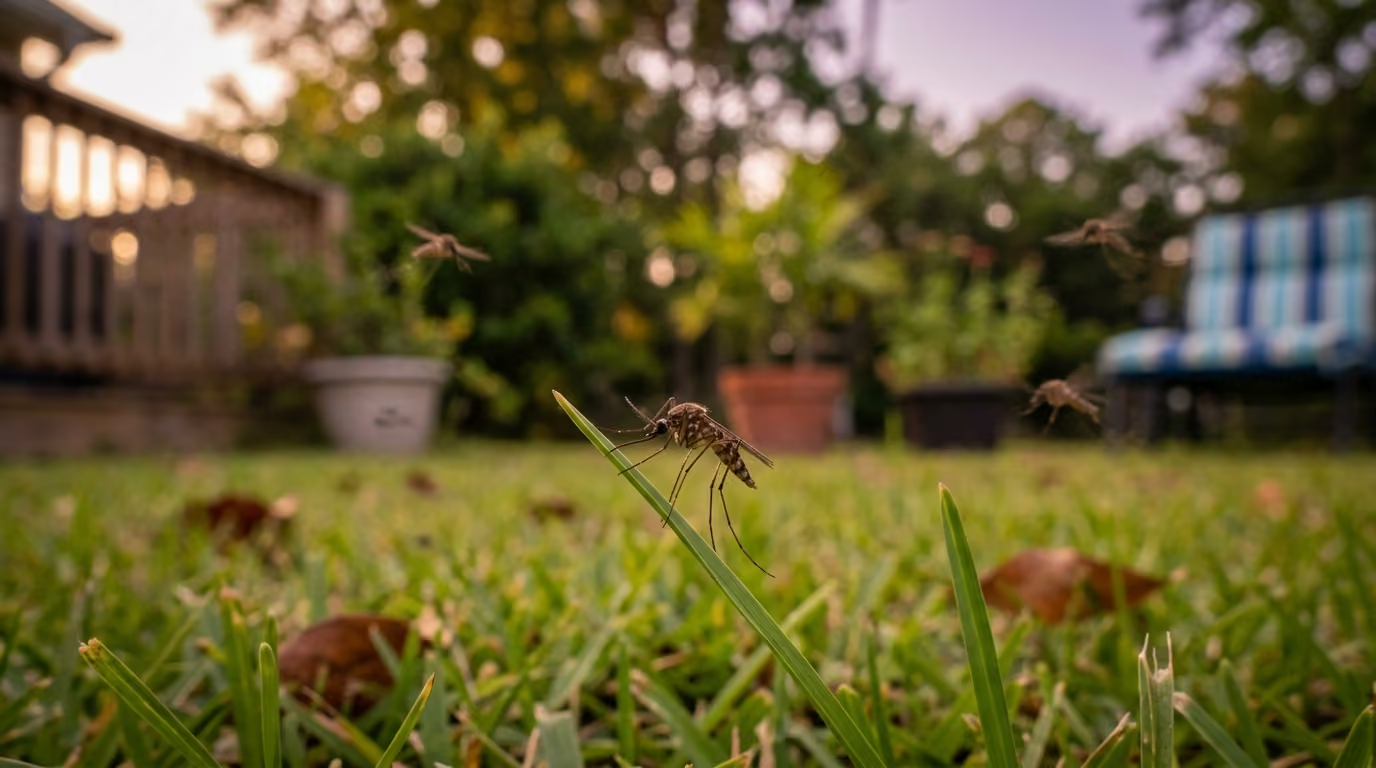
Most people along the Grand Strand mentally close the book on mosquitoes sometime around Labor Day. The kids are back in school, the beach crowds thin out, and it feels like summer has finally loosened its grip. But if you've spent any time outdoors near North Myrtle Beach in September, you already know that the mosquitoes didn't get the memo. The biting keeps going, sometimes well into October, and the reason why is also why keeping up with mosquito control in North Myrtle Beach is still important in September.
Why Mosquitoes Are Still a Real Problem Near North Myrtle Beach in September
The biology here is pretty straightforward. Mosquitoes don't follow the calendar. They follow temperature. In coastal South Carolina, daytime highs in September still regularly sit in the upper 80s, and nighttime lows rarely drop below the low 70s until well into the month. That range is comfortable for mosquito activity and breeding. The threshold where they become significantly less active is closer to 50 degrees Fahrenheit, and the Grand Strand doesn't see those numbers in September.
What makes fall mosquitoes particularly frustrating is that most homeowners have already mentally moved on. Treatments get skipped. Yard maintenance slows down. Standing water that accumulated from late-summer storms sits untouched because nobody's thinking about it anymore. That combination of warm temperatures plus reduced attention keeps mosquito populations strong even as the changing seasons suggest otherwise.
What the Coastal Environment Adds to the Problem
The ocean proximity that makes North Myrtle Beach desirable year-round also keeps temperatures mild long past when inland areas cool down. Humidity stays elevated through much of September, and that matters because mosquitoes lose water through their bodies faster in dry air. Coastal humidity lets them stay active longer each day and breed more successfully in shallow water sources that would evaporate faster inland.
Neighborhoods near tidal marshes or retention ponds face additional pressure. Those water bodies don't dry out between storms, which means they support continuous breeding cycles. Properties with even modest amounts of low-lying yard space or poor drainage can sustain mosquito populations that feel more like August than September.
When to Actually Stop Mosquito Treatment
A good rule of thumb: don't stop mosquito treatment until the nighttime temperatures drop below 60 degrees for two or more weeks. For much of the Carolina coast, that's typically late October or early November, not early fall. Stopping in September because it feels like summer is over just means the mosquitoes have three or four weeks to breed and feed in your yard with no resistance.
Barrier treatments applied in early September still protect you through most of the month, but coverage gaps created by skipping a treatment cycle are hard to recover from quickly. If your yard has ongoing breeding sources like clogged gutters, plant saucers, or low spots after rain, those need attention regardless of what month it is.
For homeowners who've been on a treatment schedule through the summer, September isn’t the time to stop. Maintaining mosquito treatments for a few more weeks will get you through to the point where dropping temperatures do the work for you.
Helpful Fall Mosquito Prevention Tips for Your Yard
Professional mosquito treatments handle the adult population and larvae in areas you can't easily reach, but there are a few things you can do that make a real difference in September specifically:
- Walk your yard after any rain and empty anything holding water, including birdbaths, buckets, tarps, and low spots in your lawn.
- Clean your gutters if you haven't done it recently, because a clogged gutter holds exactly the kind of shallow, warm water mosquitoes need.
- Trim back any dense vegetation along fence lines or the perimeter of your property, since adult mosquitoes rest in shaded foliage during the heat of the day.
These aren't permanent fixes, but they reduce the breeding pressure that professional treatment has to work against. The two approaches together get you through fall with far fewer bites than either does on its own.
If you're ready to get ahead of the rest of the season, reach out to Pest & Termite Consultants, and we'll take a look at what's driving the mosquito pressure on your property.
September Mosquito Control FAQs in Coastal SC
Do mosquitoes breed in September near the coast?
Yes. As long as temperatures stay above roughly 60 degrees Fahrenheit and standing water is present, mosquitoes can complete their breeding cycle. In coastal South Carolina, those conditions easily persist through most of September and sometimes into October.
Is fall mosquito control worth it if I'm not outside as much?
Usually, yes. Even reduced outdoor time in September can mean a lot of bites if your yard has an untreated population. Fall treatment also prevents the population from growing unchecked during the final weeks of the season, which makes next spring's startup easier.
How do I know if my yard has a breeding problem versus just neighboring mosquitoes flying in?
If you're seeing high numbers within a few feet of your house, in shaded areas around your property, or near low spots in your yard, there's likely a breeding site nearby. Mosquitoes don't typically travel more than a few hundred feet from where they hatch, so persistent problems usually mean that something on your property is supporting them.
What is the last month I should keep up mosquito treatment near North Myrtle Beach?
For most years along the Grand Strand, October is the final month where treatment reliably pays off. Once nights start consistently dropping below 60 degrees, mosquito activity slows enough that treatment becomes less necessary. That threshold usually arrives in November for coastal South Carolina.
Can professional treatment in September make a noticeable difference that quickly?
Yes. A barrier treatment applied to resting areas, yard vegetation, and breeding sites can reduce adult mosquito populations significantly within 24 to 48 hours. The result won't last indefinitely, but it provides real relief through the remainder of the active season.
Keep Your Mosquito Protection Going Into Early Fall
September mosquito pressure catches coastal homeowners off guard every year. The temperatures cooperate with mosquitoes longer here than most people expect, which is why continuing mosquito treatment until the weather actually changes is the best course of action for homeowners in North Myrtle Beach, Crescent Beach, Surfside Beach, and throughout the broader Grand Strand area. If you want to talk about starting or continuing mosquito treatment for your yard, give us a call, and we'll help you figure out a plan for the rest of the season.