
Moisture Barrier Installation in North Carolina & Coastal South Carolina
Crawlspace Moisture Barrier Installation
Crawlspaces in North Carolina and coastal South Carolina sit in some of the most humid air in the country. Ground moisture rises constantly, and without something blocking it, that vapor moves up into your floor joists, insulation, and wall framing. Wood softens. Mold finds a foothold. And pests, particularly termites and roaches, follow moisture wherever it collects. A properly installed moisture barrier is one of the more straightforward things a homeowner can do to interrupt that cycle before it becomes a structural problem.
At Pest & Termite Consultants, our termite technicians install crawlspace moisture barriers as part of our work in homes across the Carolinas. Here's what you should know before scheduling service.
To schedule an appointment for our Raleigh moisture control services, contact us at (919) 246-8831 today!
How we Install Moisture Barriers
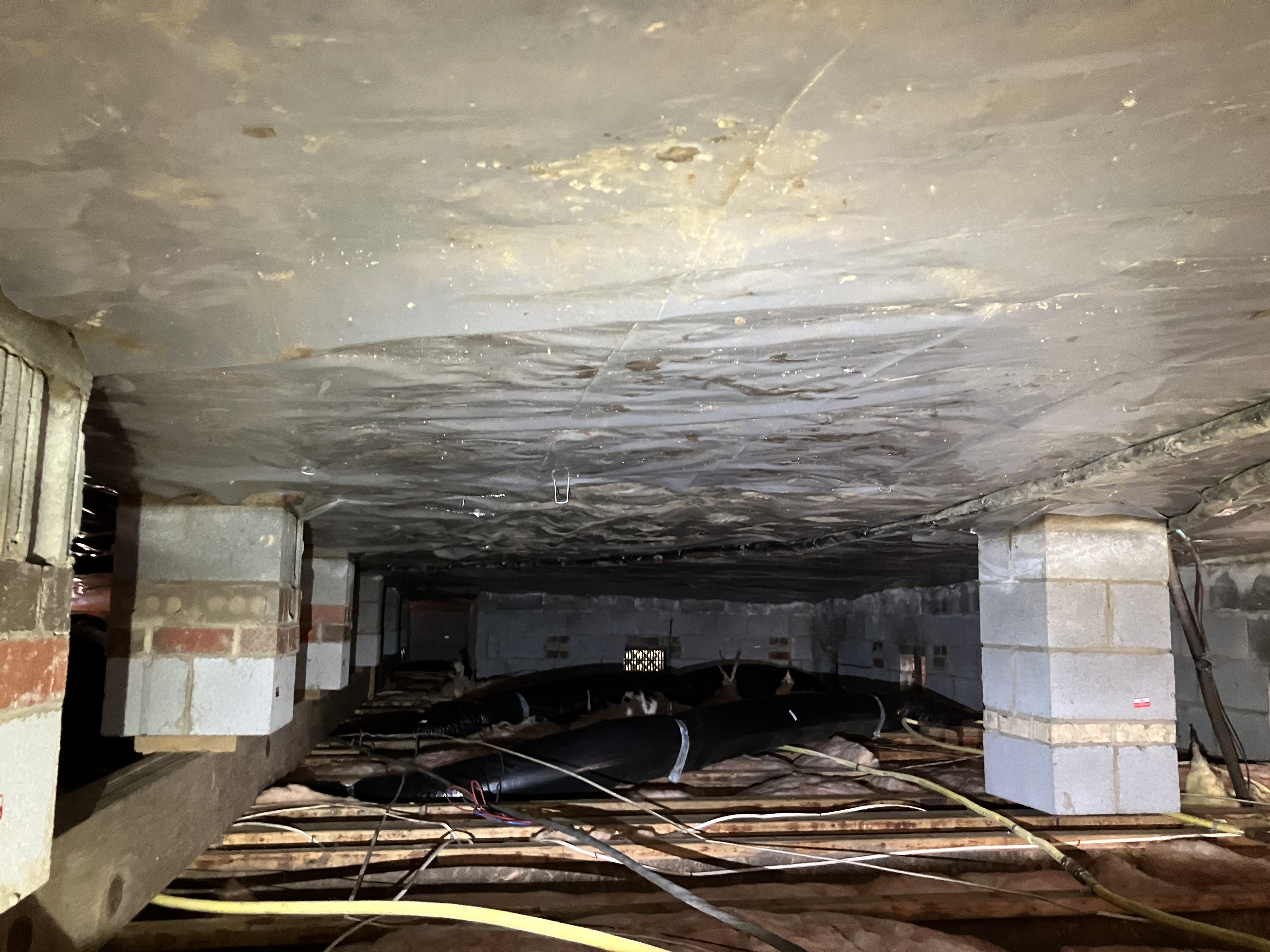
Our termite team handles all moisture barrier installations. The process starts with clearing the crawlspace floor of debris that could puncture or bunch the plastic, then laying the barrier across the soil in overlapping sections.
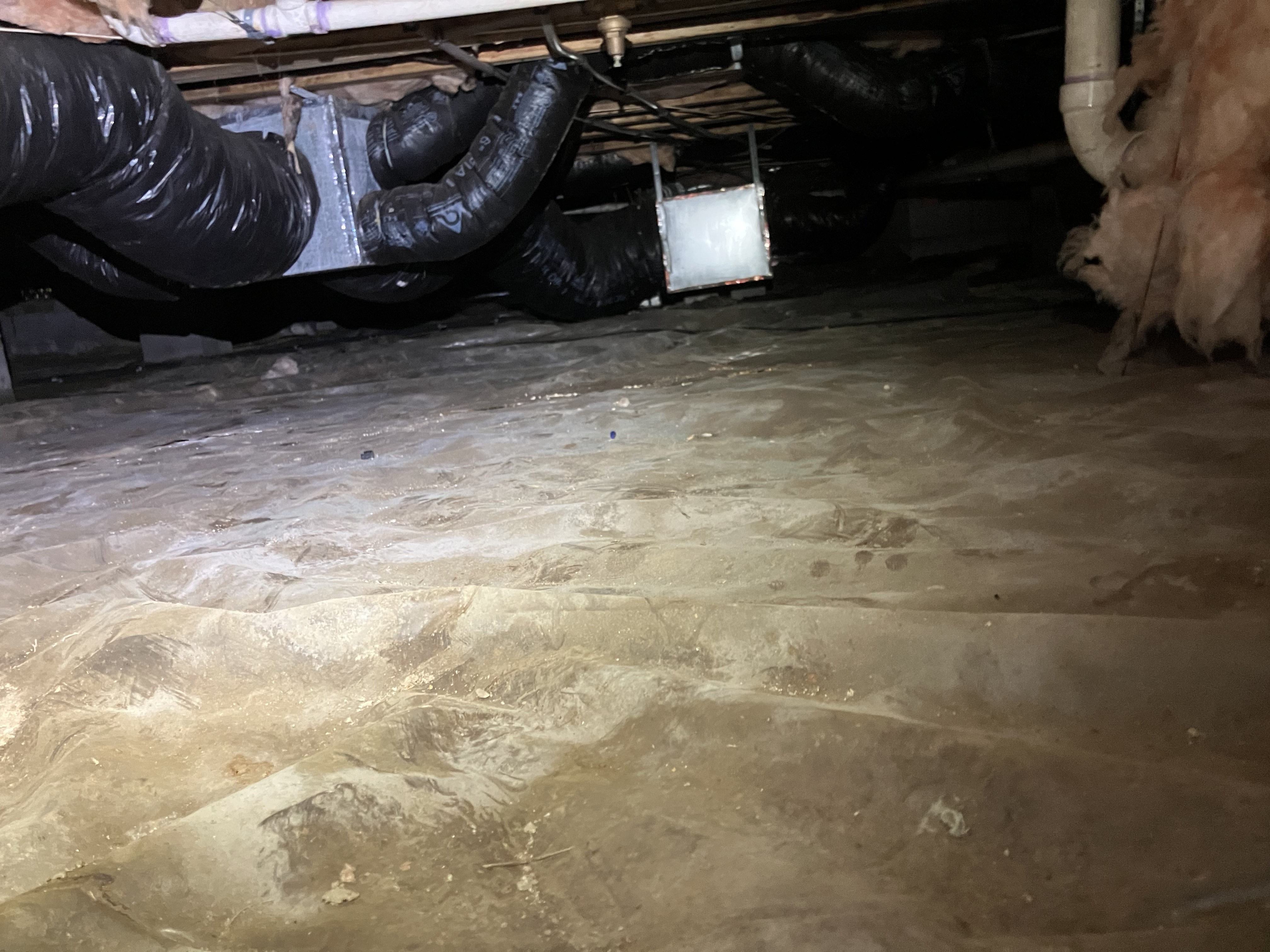
Where sheets overlap, we secure them with landscaping staples rather than tape. Tape fails over time in crawlspace environments, especially where humidity fluctuates and surfaces aren't perfectly clean or flat. Stapling the overlapping sections holds the barrier flat and keeps seams from lifting or separating as conditions change. The edges are also secured along the crawlspace walls and piers to keep the plastic from shifting.
Treat a problem


Why Ground Moisture Is Serious
Soil holds water year-round, even when the surface looks dry. In a vented crawlspace, warm humid air from outside meets the cooler ground and condenses. That condensation doesn't have anywhere to go, so it saturates the air in the crawlspace and gets absorbed by whatever organic material is nearby. Floor joists, subflooring, wooden beams, and even cardboard boxes stored below the house all act as sponges.
The consequences compound quickly. Elevated moisture levels create ideal conditions for wood-destroying fungi, which weaken lumber before termites even arrive. Subterranean termites, the most common species we treat across Raleigh, the Wilmington area, and coastal South Carolina, specifically target damp, softened wood. A dry crawlspace isn't a guarantee against termites, but a wet one is a genuine invitation.
Moisture also drives up heating and cooling costs. A humid crawlspace transfers that humidity into the living space above it, making your HVAC system work harder to maintain comfortable conditions.
Benefits You'll Notice Over Time
The most immediate change is a drier crawlspace. That reduction in ground moisture helps protect your floor system from the kind of slow decay that goes undetected for years. It also makes the space less hospitable to the pests that depend on that moisture. Roaches, silverfish, and termites all favor damp environments. Drying out the crawlspace doesn't replace a pest control plan, but it removes one of the key conditions that draws pests in and keeps them there.
Homeowners also frequently notice improved air quality in the living space above, particularly on upper floors where musty odors from a wet crawlspace can migrate upward. And in homes where HVAC ductwork runs through the crawlspace, maintaining drier conditions around that equipment helps it perform more efficiently.
For homes with existing termite protection, a moisture barrier works alongside that treatment rather than replacing it. It's one component of keeping your crawlspace in a condition that makes your home harder to damage and easier to protect.
Why Ground Moisture Is Serious
Soil holds water year-round, even when the surface looks dry. In a vented crawlspace, warm humid air from outside meets the cooler ground and condenses. That condensation doesn't have anywhere to go, so it saturates the air in the crawlspace and gets absorbed by whatever organic material is nearby. Floor joists, subflooring, wooden beams, and even cardboard boxes stored below the house all act as sponges.
The consequences compound quickly. Elevated moisture levels create ideal conditions for wood-destroying fungi, which weaken lumber before termites even arrive. Subterranean termites, the most common species we treat across Raleigh, the Wilmington area, and coastal South Carolina, specifically target damp, softened wood. A dry crawlspace isn't a guarantee against termites, but a wet one is a genuine invitation.
Moisture also drives up heating and cooling costs. A humid crawlspace transfers that humidity into the living space above it, making your HVAC system work harder to maintain comfortable conditions.
Benefits You'll Notice Over Time
The most immediate change is a drier crawlspace. That reduction in ground moisture helps protect your floor system from the kind of slow decay that goes undetected for years. It also makes the space less hospitable to the pests that depend on that moisture. Roaches, silverfish, and termites all favor damp environments. Drying out the crawlspace doesn't replace a pest control plan, but it removes one of the key conditions that draws pests in and keeps them there.
Homeowners also frequently notice improved air quality in the living space above, particularly on upper floors where musty odors from a wet crawlspace can migrate upward. And in homes where HVAC ductwork runs through the crawlspace, maintaining drier conditions around that equipment helps it perform more efficiently.
For homes with existing termite protection, a moisture barrier works alongside that treatment rather than replacing it. It's one component of keeping your crawlspace in a condition that makes your home harder to damage and easier to protect.
Frequently Asked Questions
Frequently Asked Questions
Do I need a moisture barrier if my crawlspace already has vents?
Vented crawlspaces still accumulate ground moisture. Vents allow air exchange but don't stop soil evaporation, which is the primary moisture source a barrier addresses. Many vented crawlspaces in humid climates actually perform better with a ground barrier in place than without one.
How long does a plastic moisture barrier last?
A properly installed 6-mil or 10-mil polyethylene barrier can last many years under normal conditions. Longevity depends on foot traffic, soil conditions, and whether the barrier stays undisturbed. The 10-mil option holds up better in crawlspaces that see regular access.
Can a moisture barrier help with my existing pest problem?
It removes a condition that many pests depend on, but it isn't a treatment for an active infestation. If you're already seeing termite activity, roaches, or other moisture-related pests, those need to be addressed directly. A barrier is most effective as a preventive measure or as a complement to an active pest control program.
Will the barrier cover the entire crawlspace floor?
Yes. Our technicians lay the plastic across the full soil floor in overlapping sections, secured with landscaping staples. The goal is continuous coverage without gaps that would allow moisture to escape at the seams.
Do you serve my area?
We work across a wide area in North Carolina and coastal South Carolina. You can check our full service area list to confirm your community, or get in touch with us directly and we'll let you know.
Schedule a Crawlspace Assessment
If you're not sure what condition your crawlspace is in, the best starting point is a look by someone who knows what to look for. Our technicians work in crawlspaces across the Carolinas regularly and can tell you quickly whether a moisture barrier makes sense for your home and which thickness fits your situation.
To schedule an assessment or ask about moisture barrier installation, contact Pest & Termite Consultants online or give us a call. We've been doing this work since 1993, and getting crawlspaces into better shape is something we handle every week across the communities we serve.
Do I need a moisture barrier if my crawlspace already has vents?
Vented crawlspaces still accumulate ground moisture. Vents allow air exchange but don't stop soil evaporation, which is the primary moisture source a barrier addresses. Many vented crawlspaces in humid climates actually perform better with a ground barrier in place than without one.
How long does a plastic moisture barrier last?
A properly installed 6-mil or 10-mil polyethylene barrier can last many years under normal conditions. Longevity depends on foot traffic, soil conditions, and whether the barrier stays undisturbed. The 10-mil option holds up better in crawlspaces that see regular access.
Can a moisture barrier help with my existing pest problem?
It removes a condition that many pests depend on, but it isn't a treatment for an active infestation. If you're already seeing termite activity, roaches, or other moisture-related pests, those need to be addressed directly. A barrier is most effective as a preventive measure or as a complement to an active pest control program.
Will the barrier cover the entire crawlspace floor?
Yes. Our technicians lay the plastic across the full soil floor in overlapping sections, secured with landscaping staples. The goal is continuous coverage without gaps that would allow moisture to escape at the seams.
Do you serve my area?
We work across a wide area in North Carolina and coastal South Carolina. You can check our full service area list to confirm your community, or get in touch with us directly and we'll let you know.
Schedule a Crawlspace Assessment
If you're not sure what condition your crawlspace is in, the best starting point is a look by someone who knows what to look for. Our technicians work in crawlspaces across the Carolinas regularly and can tell you quickly whether a moisture barrier makes sense for your home and which thickness fits your situation.
To schedule an assessment or ask about moisture barrier installation, contact Pest & Termite Consultants online or give us a call. We've been doing this work since 1993, and getting crawlspaces into better shape is something we handle every week across the communities we serve.


