What Late Summer Means for Roach Activity in Coastal Homes
August in Wilmington doesn't feel like things are winding down. The heat sits heavy, afternoon storms roll through almost daily, and the humidity never really lets up. For roaches, that combination is about as good as it gets. If you've been noticing more of them inside your home lately, you're not imagining it. Late summer roach control in Wilmington is something a lot of homeowners deal with right around this time of year, and the reasons why come down to basic biology and coastal conditions working against you at the same time. Here's what's actually going on and what you can do about it.
Why Late Summer Is Still Prime Time for Roach Activity
A lot of people assume roach problems peak in spring or early summer and then taper off. In coastal North Carolina, that's not how it works. August and September can actually bring heavier pressure than earlier in the season because roach populations have had months to grow. A single female German cockroach can produce hundreds of offspring in her lifetime, and by late summer, the colonies that started small in April or May have had plenty of time to establish themselves.
Roaches are cold-blooded, which means their metabolic rate rises with temperature. Warmer conditions speed up their reproduction cycle, increase how much they eat, and push them to explore more territory in search of food and water. Wilmington's average August temperatures regularly push into the low 90s, which keeps roaches biologically active and aggressive about finding resources. They don't slow down until nighttime temperatures start dropping consistently below 60 degrees, and along the coast, that typically doesn't happen until October or later.
The population buildup combined with increased biological drive means late summer is often when homeowners finally notice an infestation that's been developing for months. Seeing one roach in your kitchen in August usually means there are many more you aren't seeing.
How Coastal Humidity and Rain Create the Right Conditions for Roaches to Move Indoors
Wilmington averages more than 55 inches of rain annually, and a good portion of that falls during the summer months. Late summer storms don't just water the lawn. They saturate the soil around your foundation, push moisture up through crawl spaces, and raise indoor humidity levels throughout the house. Roaches need water to survive, and they're remarkably good at finding it in places you'd never think to look.
Some of the moisture sources that attract roaches to coastal homes during late summer include:
- Wet mulch and leaf litter around the foundation
- Clogged gutters and poorly drained areas around the foundation
- Damp crawl spaces with high humidity or poor ventilation
- Areas beneath sinks with plumbing leaks or condensation
- Moist areas around air conditioning units and condensate lines
- Bathrooms and laundry rooms with consistent moisture
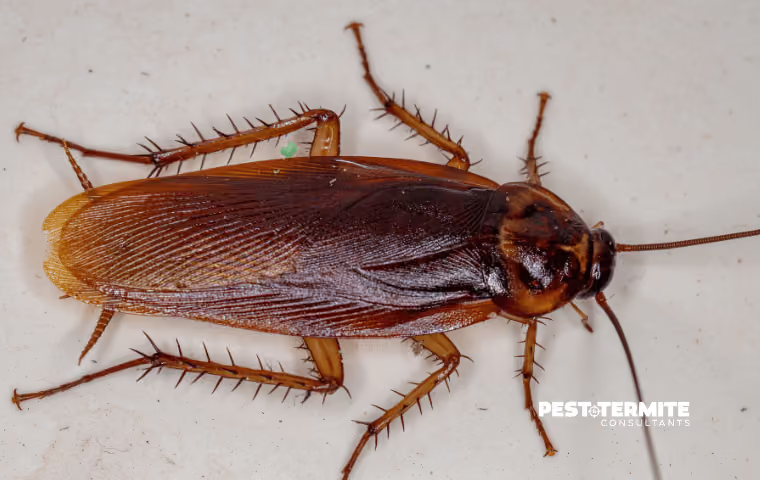
American cockroaches, the large reddish-brown species sometimes called palmetto bugs, are especially common in coastal homes because they thrive in warm, moist environments. They spend most of their time outside in mulch beds, leaf litter, and tree hollows, but heavy rain drives them out of saturated ground and toward any dry shelter they can find. Your home's foundation vents, gaps around utility penetrations, and spaces under doors are all entry points they'll use without hesitation. Our team serving Wilmington, Ogden, Leland, and the surrounding areas sees this same pattern play out every August.
Why Roaches Move Indoors Even When Food Isn't the Main Draw
It's easy to think that if you keep a clean kitchen, you won't have a roach problem. Removing potential food sources and tidying clutter helps, but cleanliness alone won't protect a coastal home from pest pressure during late summer. Roaches move indoors for several reasons beyond food, and moisture is often their biggest motivator during this part of the year.
German cockroaches, the smaller species that infest kitchens and bathrooms, are particularly tied to indoor environments and rarely survive outdoors in our climate. Once they're inside, they breed fast and stick close to harborage sites that offer warmth and humidity. They hide in motor housings of appliances, inside wall voids near plumbing, and behind the rubber gaskets of refrigerator doors. You often don't see them at all until the population is large enough that competition for harborage pushes them into open areas.
American cockroaches moving in from outside are a different story. They're not establishing permanent indoor colonies the way German roaches do, but they can wander in repeatedly, especially if conditions around your foundation and crawl space are favorable. Addressing the exterior environment matters just as much as treating inside your home.
Our cockroach treatments focus on both sides of the problem, treating harborage areas indoors while also creating a barrier that stops roaches from getting in through the perimeter.
What You Can Do Right Now to Reduce Roach Pressure
Professional treatment is the most reliable way to deal with an active roach problem, but there are steps homeowners can take to make the situation better between services. A few of these practices also make your home less appealing in the first place.
Focus on moisture first. Check under sinks for slow drips, make sure your HVAC condensate line drains properly, and look at your crawl space if you have access. A crawl space with standing water or a deteriorated vapor barrier is a roach magnet during wet summers.
On the exterior, consider these steps before late summer storms become a regular pattern:
- Keep gutters clean so rainwater drains away from your home.
- Check downspouts to make sure water is directed away from the foundation.
- Remove leaf litter, fallen branches, and other organic debris from around your house.
- Keep mulch and pine straw from piling directly against the foundation.
- Trim shrubs and ground cover so they do not touch the exterior of your home.
- Store firewood and lumber away from your house and off the ground.
- Seal gaps around utility lines, foundation vents, windows, and exterior doors.
- Replace damaged door sweeps and weatherstripping that could provide entry points.
- Keep outdoor trash and recycling containers closed and clean.
- Correct low spots or drainage problems that allow water to collect near the foundation.
These aren't guarantees, especially in a coastal climate where moisture is a constant factor, but they do reduce the conditions roaches are looking for when they start moving toward your home.
When DIY Products Stop Being Enough
Store-bought sprays can kill the roaches you see, but they don't reach harborage areas, interrupt egg cases, or address why roaches are getting in to begin with. German cockroaches in particular are notoriously resistant to many over-the-counter products, and repeated exposure to a repellent spray can actually scatter a colony deeper into wall voids, making the problem harder to treat later.
Gel baits are more effective than sprays for indoor German roach control, but they need to be placed correctly and rotated to prevent bait aversion. Roaches will stop feeding on a bait they've encountered repeatedly, which is why professional-grade products and proper application strategy make a real difference. The same is true for growth regulators, which interrupt the reproductive cycle but require precise application to work as intended.
If you've tried over-the-counter solutions and the problem keeps coming back, that's a reliable sign the infestation is more established than surface treatments can address. Reaching out to Pest & Termite Consultants for a proper inspection is usually the faster path to getting it resolved. We work across the greater Wilmington area, so help is close by regardless of where you're located along the coast.
FAQs About Late Summer Roach Activity Near Wilmington
Why are roaches suddenly appearing even though my house is clean?
Cleanliness reduces food sources, but it doesn't eliminate the moisture and warmth that roaches need to survive. In late summer, heavy rain and high humidity push roaches indoors even in well-maintained homes. They can also enter through gaps you might not have noticed, carried in on boxes, bags of pet food, or produce from a store or warehouse that already had an infestation.
Are the big roaches I'm seeing different from the small ones in my kitchen?
Yes. The large ones are almost certainly American cockroaches, which typically live outdoors and come in when conditions outside get wet or crowded. The small ones are likely German cockroaches, which are true indoor pests. German roaches reproduce faster and are harder to eliminate because they stay close to harborage sites deep inside your home. Both are common along the North Carolina coast, and both require different treatment approaches.
How do I know if I have a roach infestation or just an occasional visitor?
Occasional is rarely the right word with roaches. If you're seeing them during daylight hours, that's a sign of significant population pressure, since roaches normally avoid light. Other indicators are small dark droppings that look like coffee grounds or black pepper, a musty odor in cabinets or under appliances, and shed skins or egg casings in corners and crevices. Any of these points to an established infestation that needs professional attention.
Is late summer treatment still worth it if fall is coming?
Absolutely. German cockroaches don't go away in the fall because they live entirely indoors. American cockroaches will slow down outdoors as temperatures drop, but they often move deeper into your home's walls and crawl space to overwinter. Treating now stops the population from carrying over into next year in larger numbers. Late summer is genuinely one of the better times to begin roach treatments for Wilmington homes because roaches are active and feeding, which makes baits and professional-grade treatments more effective.
Ready to Get Roaches Out of Your Home?
Late summer conditions in Wilmington aren't going to cooperate with you on roach control. The heat, the rain, and the humidity all work in their favor. What works in yours is knowing what you're dealing with and getting the right treatment in place before populations grow any larger heading into fall. Pest & Termite Consultants can inspect your home, identify the species involved, and put together a treatment plan that addresses both the inside infestation and the exterior conditions drawing roaches in. Call us today at (910) 707-3830 to schedule your inspection or learn more about our cockroach control services in Wilmington.