Why Ants Reappear Even After You Thought They Were Gone
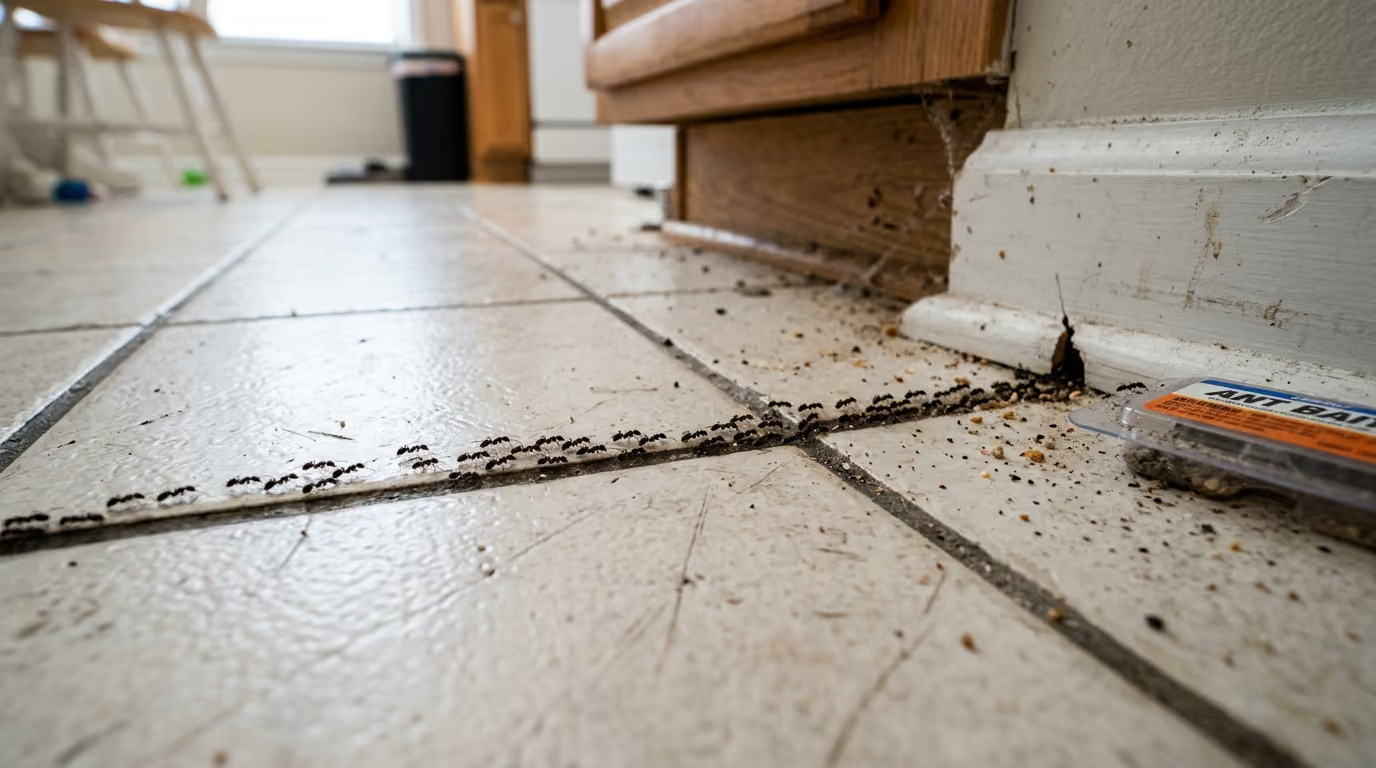
When you see ants in your home, you likely spray the trail, wipe down the counters, and figure that's the end of it. But then a few days later, they're back. If ant problems keep coming back in Wilmington or elsewhere along the coast, it’s likely not related to cleanliness. The real reason why ants keep returning has more to do with how colonies work than how clean your kitchen is.
Spraying the Trail Only Solves Part of the Problem
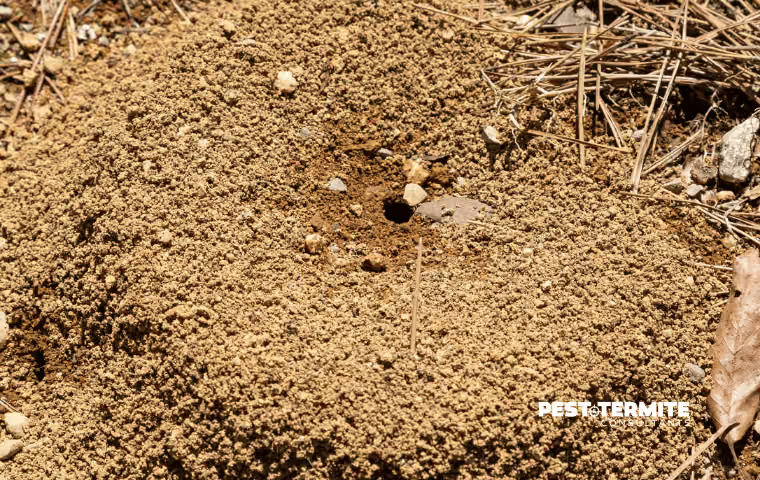
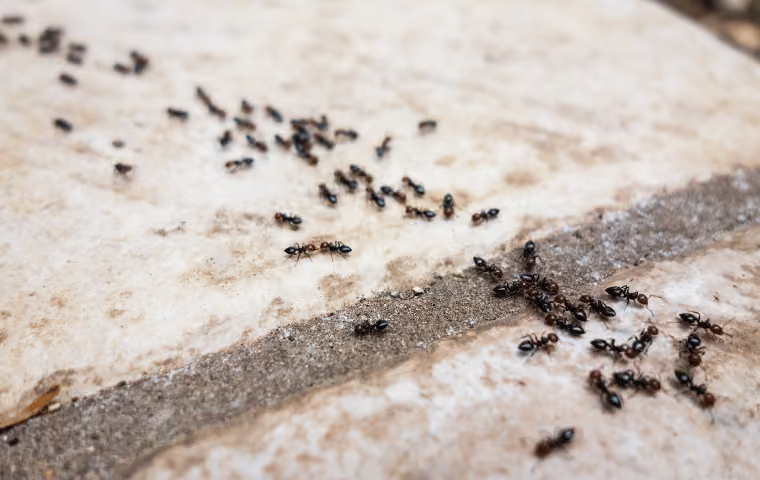
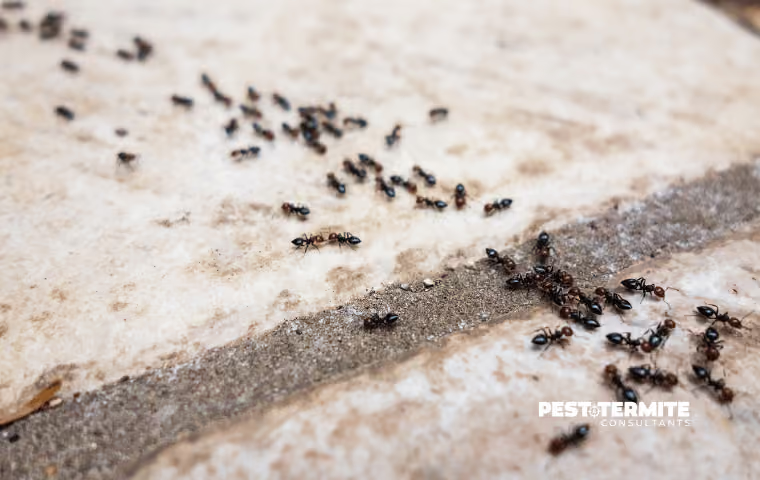
When you see a line of ants moving across your floor, that trail is just the visible part. Scout ants lay a pheromone path back to a food source, and dozens more follow it inside. Spraying or wiping that trail removes the workers you can see, but the queen and the rest of the colony are still underground, producing eggs and expanding in number. A healthy ant queen can lay hundreds of eggs per day, so the colony replenishes lost workers faster than most homeowners expect. Within a week or two, new foragers emerge and scout again, and the colony barely registers the setback.
Most over-the-counter sprays work as contact killers. They're effective on the ants they touch, but they don't get carried back into the nest. That's the key difference between a product that kills foragers and one that actually addresses the entire colony. Without reaching the source, you're just resetting the clock.
Why Wilmington's Summer Conditions Keep Ant Pressure High
Coastal summers aren't doing homeowners any favors here. Heat and humidity accelerate ant colony growth, which means colonies are larger and more aggressive about foraging during July and August than at almost any other point in the year. When soil dries out during a stretch of hot weather, ants also move closer to homes in search of moisture, not just food.
Wilmington gets enough summer rain to keep vegetation dense and create plenty of nesting spots in mulch beds, rotting wood, and soil near foundations. Fire ants, Argentine ants, and carpenter ants are all active in the area, and each species behaves a little differently. Argentine ants, in particular, form sprawling supercolonies that can span multiple properties, which is why treating just your yard often isn't enough when the colony extends into a neighbor's landscape too. This is a common problem in the coastal communities we service, including Wilmington, Castle Hayne, and Porters Neck.
We offer effective pest control services for ants in Wilmington and the surrounding communities, including general ant control treatments and specialized fire ant control services.
The Attractants You Might Not Be Thinking About
A clean kitchen is a good start, but ants are opportunists with a broader definition of what they find "attractive" than most people assume.
Moisture Sources
Moisture is often the bigger draw than food, especially during summer. A slow drip under the bathroom sink, condensation around an AC unit, or damp wood in a crawl space can all pull ants in even when there's nothing edible nearby. Pet water bowls, houseplant saucers, and clogged gutters holding standing water are easy to overlook but worth checking.
Entry Points
Easily accessible entry points are also a big reason why ants move indoors. Gaps around plumbing penetrations, door sweeps that don't seal flush, cracks in the slab or foundation, and spaces where window caulk has dried and pulled away all give ants a way back in after a treatment. Cutting back shrubs and tree branches that touch your house removes the bridges ants use to get above the foundation and bypass any perimeter barrier.
These aren't total fixes on their own, but missed attractants like these are exactly why ants seem to come back even after a treatment appeared to work at first. Addressing them also makes professional treatment hold significantly longer.
FAQs About Recurring Summer Ant Infestations in Wilmington
Why do ants come back so quickly after I treat them myself?
Because store-bought contact sprays only kill the foragers you can see. The queen is still actively producing new workers deep within the colony. As long as she's alive and the colony is intact, the foraging population replenishes itself within days to weeks. The infestation looks resolved on the surface while the colony carries on underneath.
Can a colony really survive if I kill most of the ants I see?
Yes, easily. Ant colonies are structured so that foragers are the most expendable members. The colony's survival depends on the queen and the brood, which are protected well below the surface. Losing a significant number of foragers slows things down temporarily but doesn't threaten the colony's long-term survival. Some species, like Argentine ants, also have multiple queens, which makes them even harder to knock back without a treatment that reaches the nest directly.
I keep my house pretty clean. Why do I still have ants?
Food crumbs are only one part of the equation. Moisture is often the bigger draw, and structural entry points matter just as much as what's inside. Ants don't need a dirty house. They need a reason to forage and a way to get in. If those two conditions exist, a spotless kitchen won't stop them from showing up.
Let Professional Treatment Get To the Source of Your Ant Problem
A professional ant treatment works differently than a store-bought spray because it's designed to be transferred. Slow-acting bait gets picked up by foragers, carried back into the nest, and shared with the colony, including the queen. It takes a bit longer to see results, but it reaches the source rather than just the workers on your countertop. Perimeter treatments applied to the foundation and surrounding soil also create a barrier that reduces the pressure of new foragers finding their way in.
Recurring ant problems are usually a sign that the colony itself hasn't been addressed, not that the treatment failed. If you've been dealing with ants that keep coming back through the summer, that pattern is worth breaking before fall. Our team at Pest & Termite Consultants offers professional ant control services in the Wilmington area and can identify exactly what species you're dealing with and where they're nesting. Reach out to us to schedule a visit and get a real solution instead of another temporary fix.