Why Waiting on Pest Control Makes Late Summer Pest Pressure Worse in Fayetteville
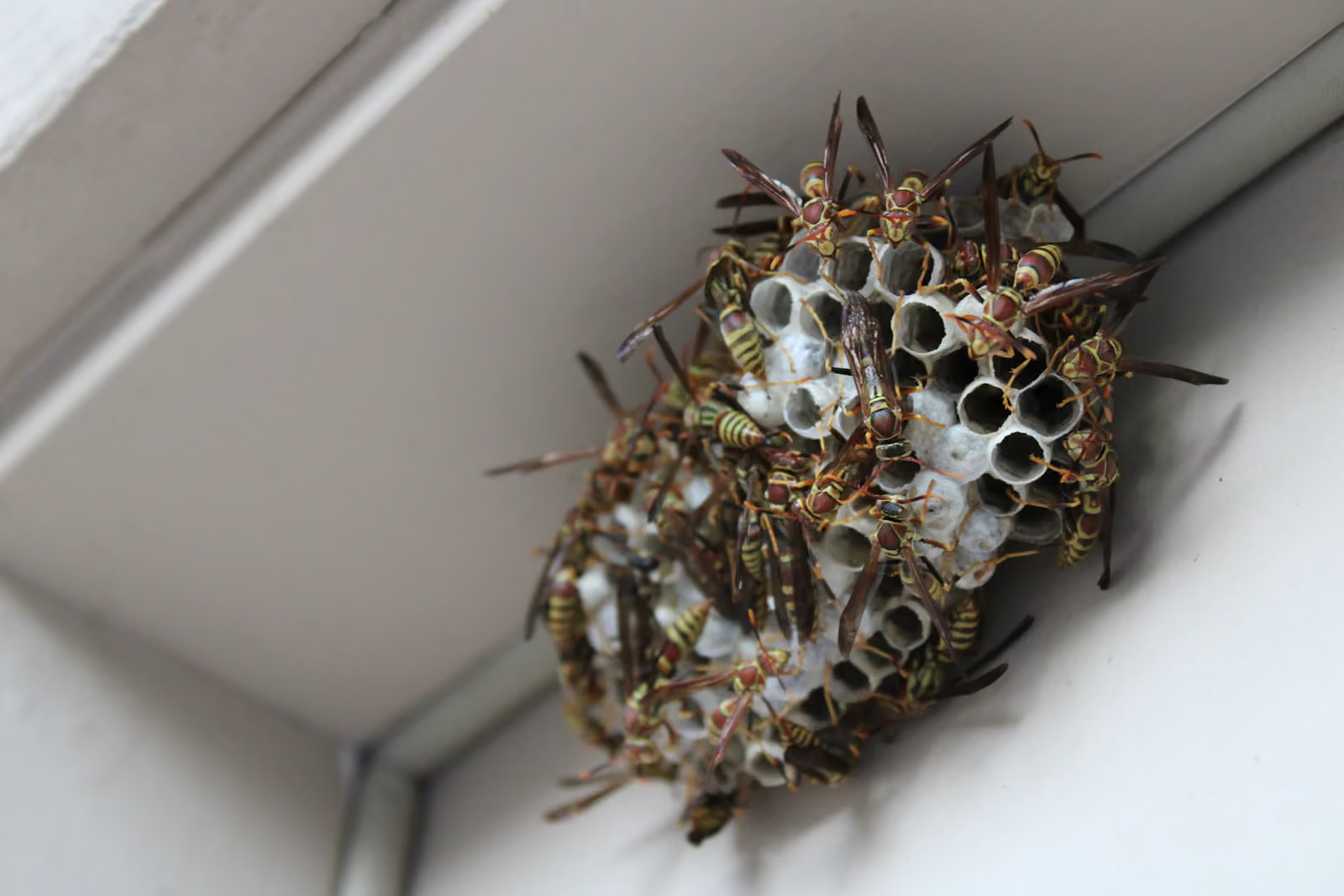
Late summer in Fayetteville is hard on homeowners who've been putting off pest control. By August, colonies that started small in the spring have had months to grow, and the combination of heat, humidity, and drought stress sends more pests indoors in search of water and cooler air. Waiting until you actually see a problem inside your home usually means the population outside is already well-established. That gap between "I'll deal with it later" and "why is this suddenly everywhere" is shorter than most people expect.
Why Waiting Makes Late Summer Pest Control in Fayetteville Harder
Most pest colonies follow a growth curve. A yellow jacket nest that held a few hundred workers in May can reach several thousand by August. Ant colonies that started foraging under your mulch in spring have branched out, established new satellite colonies, and mapped every food and moisture source within range of your foundation. The problem with waiting isn't just that there are more pests. It's that a larger, more established colony is significantly more resistant to treatment. Products that work well on a young colony often can't reach the queen or eliminate all satellite activity in a mature one.
North Carolina's summer pattern accelerates this. High humidity through June and July gives ground-nesting insects ideal soil conditions, and the late-summer heat pushes activity into overdrive before populations start to decline in the fall. By the time most homeowners notice pressure inside their house, control takes more effort, more follow-up, and more time to see results.
How the Heat Drives Pests From Your Yard Into Your Home
Stinging insects aren't the only ones responding to late-summer conditions. Ants, roaches, and spiders all shift behavior as temperatures peak and outdoor moisture gets scarce. Small cracks around door frames, utility penetrations, and weep holes in brick that didn't get much use earlier in the season become entry points. As fall approaches, this indoor migration can happen fast.
Stinging insects are a particular concern in August because nests are at or near peak size, and colonies become more defensive as the season moves toward fall. Workers protecting a large nest are more aggressive than they were in early summer, which makes a nest near a door, under a deck, or in a wall void a real safety issue for families using their outdoor spaces. DIY sprays may knock down visible activity temporarily, but they rarely get deep enough into a wall void or ground nest to eliminate the colony.
What DIY Products Usually Can't Do at This Point in the Season
Over-the-counter sprays and traps are built for early-season, light infestations. They work on the pests you can see and reach. The issue in late summer is that the bulk of the population, whether it's an ant colony under your patio or a yellow jacket nest inside a wall, is out of reach of a spray can. Treating the foragers you see doesn't address the source, and it can actually scatter some species, pushing satellite colonies further into your home's structure.
Homeowners in Fayetteville and the surrounding communities frequently report that a problem they tried to manage on their own in July was much worse by mid-August. That's typical. Without treating the colony itself with professional-grade materials and application methods, you're managing symptoms rather than the underlying problem. A trained technician can identify nest locations, species behavior, and entry points that aren't obvious from a walk around the yard.
Getting Ahead of the Problem Before It Reaches Your Living Space
The most practical thing you can do right now is to stop treating pest pressure as something to address once it's inside. Exterior perimeter treatments applied before pests establish indoor routes are far more effective than reactive interior treatments. Reducing conducive conditions around your home, such as gutters that collect standing water, mulch piled against the foundation, and wood debris near the house, limits the factors that support large outdoor populations in the first place.
If you're already seeing stinging insects, ants, or other pests in or around your home, the outdoor population has almost certainly grown beyond what seasonal maintenance can address. Our team serves homeowners throughout Fayetteville and the surrounding communities, and late summer is consistently one of our busiest times precisely because the delay-and-react approach tends to result in an uptick in calls this time of year. Getting a professional assessment now, before fall migration brings another wave of pests looking for warmth indoors, is the smarter move.
FAQs About Late Summer Pest Pressure Around Fayetteville Homes
Is late summer actually the worst time for pest pressure in Fayetteville?
For most pest species, yes. Colonies that started building in spring reach their largest size in late summer, and the heat pushes both outdoor activity and indoor migration to a peak. It isn't that pests aren’t a problem earlier in the season, it’s just that there are more of them by August, and they're more motivated to move inside as conditions outside become less favorable.
Why are stinging insects more aggressive right now than they were earlier in the year?
Nest size is the main driver. In early summer, a yellow jacket or wasp colony is still small and relatively easy to avoid. By August, the colony may have thousands of workers, all of them focused on defending a much larger territory around the nest. That defensive behavior intensifies as fall approaches because workers are protecting a large, thriving nest. A wasp nest that seemed manageable in June can become more hazardous by August.
Can I wait until fall when pest activity naturally slows down?
Waiting until fall reduces outdoor activity, but it doesn't eliminate the problem. Many pests, including ants, roaches, and certain stinging insects, move indoors before the cold sets in rather than dying off. A colony that spent the summer establishing routes into your home will use those same routes to overwinter inside. Treating in the fall is better than not treating at all, but the colony is often harder to address once it's split between outdoor nests and interior harborage. This is why we recommend late summer pest control in Fayetteville rather than delaying treatment until the fall.
How do I know if what I'm seeing is a sign of a larger outdoor colony?
Regular indoor sightings are usually the clearest indicator. Seeing one ant occasionally isn't the same as finding a consistent trail near a baseboard or window sill. With stinging insects, visible nest activity near entry points, repeated sightings of the same species in the same area, or finding workers inside your home without an obvious source are all signs that a nest is established close by. A professional inspection can confirm what's present and where.
Do perimeter treatments actually keep pests from getting inside, or do they just slow things down?
A properly applied exterior perimeter treatment does more than slow things down. It creates a treated barrier along the foundation, around entry points, and through the areas where pests typically travel. When timed before colonies peak, it interrupts foraging routes before insects map a path inside. That said, perimeter treatments work best as part of a recurring plan rather than a one-time application because the barrier degrades over time and pest pressure doesn't stop between visits.
Don't Wait to Start Pest Control for Your Fayetteville Home
Late summer pest problems rarely improve simply by waiting for cooler weather. Delaying treatment allows pests to keep taking advantage of food, moisture, shelter, and entry points around your property. The longer those conditions remain unaddressed, the more opportunity pests have to establish themselves around or inside your home.
If you're ready to stop chasing pests and get in front of the issue, contact Pest & Termite Consultants to schedule a visit. We'll assess what's happening inside and outside your home and develop a plan that addresses the source of the problem. Call (910) 781-8980 to schedule pest control services near Fayetteville and protect your home through late summer and the seasons ahead.