What a Crawlspace Moisture Barrier Does and Why It Matters
Crawlspace moisture is one of those problems that hides well. You might never go down there, which means you might not notice standing water, condensation on floor joists, or the faint smell of mildew until it has already created a bigger issue. A crawlspace moisture barrier, sometimes called a vapor barrier, is one of the most practical ways to get ahead of that. Here is what it actually does, why it matters in a climate like ours, and how it connects to pest activity you might already be dealing with.
What a Crawlspace Moisture Barrier Actually Does
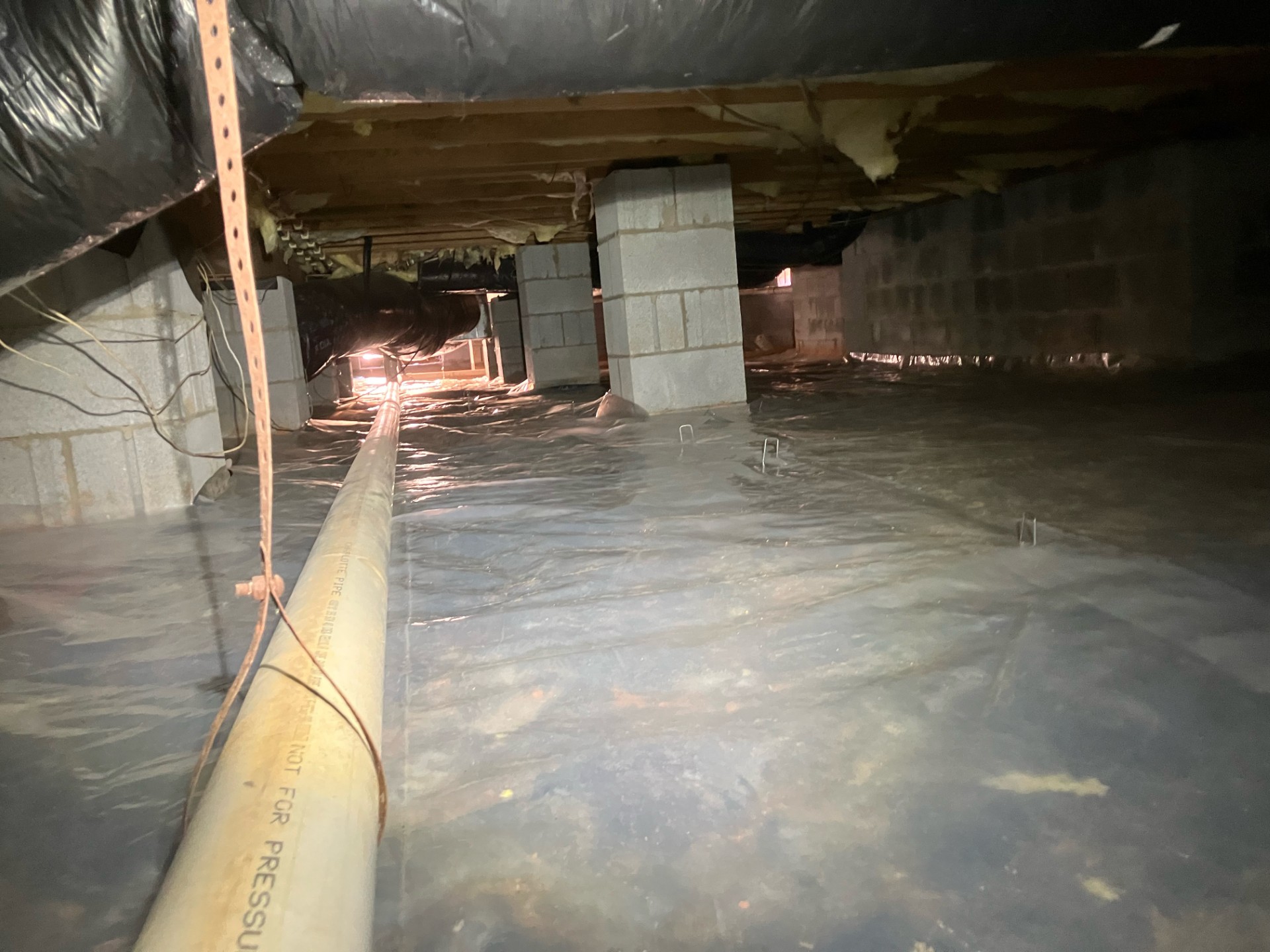
The basic idea is straightforward. A moisture or vapor barrier is a polyethylene sheeting, typically 6 to 20 mils thick, that gets installed across the floor and often up the walls of your crawlspace. Its job is to slow the movement of ground moisture into the air inside the crawlspace.
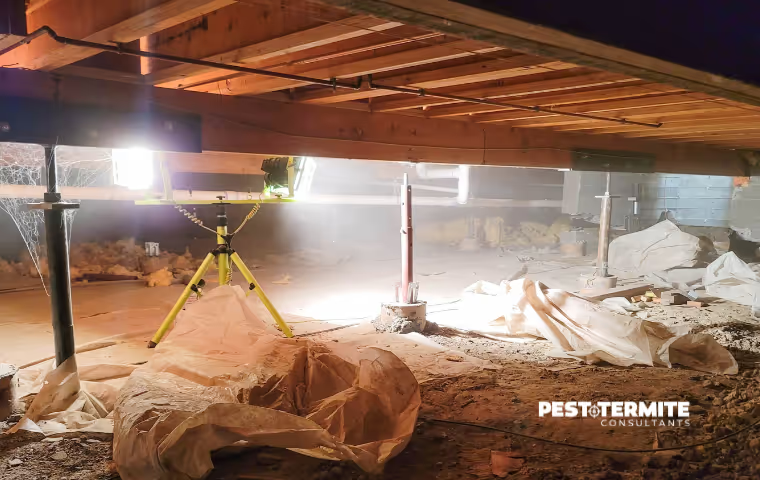
Bare soil releases a steady supply of water vapor. Without anything in the way, that vapor rises, condenses on cooler surfaces like floor joists and subfloor sheathing, and gradually saturates the wood. Over time, that creates exactly the conditions that lead to mold growth, wood rot, and structural softening. A properly installed barrier cuts off that moisture at the source before it gets a chance to move upward.
Thicker barriers, in the 12 to 20 mil range, also hold up better to foot traffic during inspections and service visits. That matters if your crawlspace gets any regular attention, which it probably should.
Why Crawlspace Moisture Is a Bigger Problem in the Carolinas
Homes across North Carolina and coastal South Carolina deal with high ambient humidity for a long stretch of the year. Raleigh, Wilmington, and the Grand Strand communities all see extended periods of warm, wet weather that puts real pressure on crawlspaces that were not built with vapor control in mind.
Older homes in particular often have vented crawlspaces designed around an assumption that outdoor air would dry things out. In a humid climate, the opposite tends to happen. Warm, moist air comes in through the vents, hits cooler surfaces inside, and deposits moisture rather than removing it. The crawlspace ends up wetter than the ground outside.
This is also why homes in Hampstead, Leland, and other coastal communities tend to see crawlspace-related issues show up faster. The proximity to water, the soil composition, and the humidity levels all work against an unprotected crawlspace more aggressively than they would in a drier inland climate.
The Pest Connection Homeowners Often Miss
Moisture control and pest control are more connected than most homeowners realize. Soft, damp wood is easier to tunnel through, which is exactly why Raleigh-area homes with crawlspace moisture problems tend to show up on our radar when we are doing termite inspections. Carpenter ants follow the same logic. They do not eat wood the way termites do, but they do excavate galleries inside it, and they strongly prefer wood that moisture has already softened.
Cockroaches and rodents are drawn to crawlspaces for warmth and shelter, but a damp crawlspace gives them both of those things plus a water source. Reducing moisture does not eliminate pest pressure on its own, but it removes one of the things that makes a crawlspace attractive in the first place. When our team is working through a crawlspace pest issue for clients across the Durham area or down in Longs, a moisture problem in the crawlspace almost always comes up in the conversation.
What to Expect From a Proper Installation
A vapor barrier that is just laid loosely on the ground and left there does not perform the same way as one that is properly sealed. Good installation means overlapping the seams by several inches and taping them, running the sheeting up the foundation walls and securing it, and making sure any pipes or posts that penetrate the barrier get sealed around. Gaps defeat the purpose.
If there is already a moisture issue, that usually needs to be addressed first. Standing water should be resolved, whether through drainage correction or a sump pump, before a barrier goes down on top of it. Installing a barrier over an active water problem just traps it.
Done right, a crawlspace moisture barrier lowers relative humidity under your home, reduces the risk of wood damage, and makes the space less hospitable to the pests that follow moisture. It is one of those improvements that does not get a lot of attention until after something goes wrong, but it is much easier to put in place before you have a problem than after.
If you have questions about your crawlspace or want us to take a look at what is going on down there, our team serves communities across North Carolina and South Carolina. You can reach out to schedule an inspection and we will walk you through what we find.
Frequently Asked Questions
How thick should a crawlspace vapor barrier be?
For most residential crawlspaces, a barrier between 10 and 20 mils is a reasonable target. Thinner options exist but tend to tear more easily, especially if anyone accesses the space periodically for inspections or HVAC maintenance. Thicker sheeting costs more upfront but lasts longer and holds up better under foot traffic.
Can I install a vapor barrier myself?
Technically yes, but the results vary a lot depending on how the seams are handled and whether the edges are properly secured to the walls. A barrier with gaps, loose seams, or sections that curl away from the walls allows moisture to work around it. If the crawlspace already has standing water, drainage or grading problems, or evidence of pest activity, those are worth having a professional assess before any installation happens.
Does a vapor barrier also help with mold?
It can, because mold growth in crawlspaces is almost always tied to moisture. Cutting off ground moisture before it saturates wood and insulation removes one of the primary conditions mold needs. That said, a barrier alone is not a mold remediation solution. If mold is already present, that needs to be dealt with before anything else goes in.
How do vapor barriers and crawlspace pest problems connect?
Damp crawlspaces are more attractive to termites, carpenter ants, cockroaches, and rodents because moisture softens wood and creates a stable environment with access to water. Reducing crawlspace humidity through a properly installed barrier is not a substitute for pest treatment, but it does make the space less hospitable and easier to protect over time. Our team factors crawlspace conditions into every inspection we run.
How long does a crawlspace vapor barrier last?
A quality barrier that is properly installed and not disturbed can last 15 to 25 years or more. The main things that shorten the lifespan are physical damage from foot traffic on thin sheeting, persistent standing water that was not resolved before installation, and areas where seams were not sealed and have since separated.
If you are across the communities we serve in North Carolina and South Carolina and want a professional set of eyes on your crawlspace conditions, Pest & Termite Consultants is ready to help. Contact us to set up an inspection at a time that works for you.