Why Rodents Target Crawlspaces and Attics in Coastal Wilmington Homes

Most homeowners don't think about rodents until they hear something moving in the ceiling or find droppings behind the water heater. By that point, mice or rats have usually been inside for weeks. In coastal areas like Wilmington, the conditions that draw rodents indoors are predictable, and so are the places they go first. Understanding where they nest and what lets them inside is what makes rodent exclusion work, rather than just temporarily reducing the activity you can see.
Where Rodents Go Once They're Inside
Crawlspaces are the most common nesting area we find in Wilmington-area homes. They are low-traffic, often humid, and full of insulation that makes an ideal bedding material. Coastal homes built on piers or block foundations frequently have vents that have deteriorated, missing vent screens, or gaps around utility penetrations that haven't been sealed in years. Rats in particular are strong swimmers and comfortable in moist environments, so the damp conditions that come with coastal living don't deter them the way homeowners might assume.
Attics are the second most common target. Norway rats tend to stay low and favor crawlspaces and wall voids, while roof rats, which are common throughout the Cape Fear region, are excellent climbers. They follow utility lines, downspouts, and tree branches to reach rooflines and enter through gaps at the soffit or where roofing materials meet fascia boards. Once inside an attic, they are hard to detect until the population has grown large enough to produce consistent noise.
What Effective Rodent Exclusion Involves
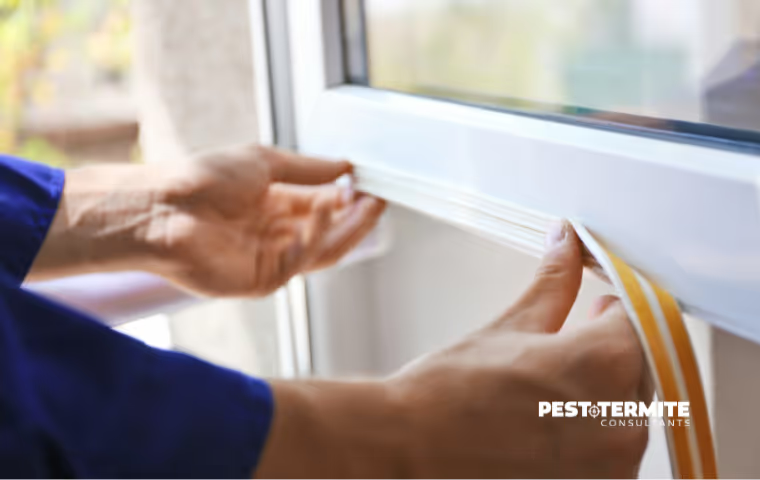
Successful rodent exclusion means finding and sealing every practical rodent entry point before trapping begins. This matters because trapping without exclusion just reduces the current population while the home stays open to new mice or rats moving in from the surrounding area.
Some common entry points we look for in Wilmington homes include:
- Gaps where HVAC lines, plumbing, or electrical conduit enter the foundation
- Openings behind deteriorated kick-out flashing
- Holes worn through older crawlspace vents
- Any spots where two building materials meet and the seal has failed
Mice can fit through a gap roughly the size of a dime, so the inspection has to be methodical rather than a quick visual sweep.
After sealing, trapping addresses the rodents that are already inside. This order, exclusion first, then trapping, is the version that produces lasting results. Doing it in reverse means you're catching some rodents while others continue entering freely.
Why October Is a Useful Time to Act
Rodents don't wait for the first cold night. They start searching for shelter as temperatures begin dropping in the evenings, which in coastal North Carolina typically happens in October. The pressure builds gradually, and homes that have any structural gaps tend to have rodent problems before homeowners notice the signs.
Acting now, rather than after you've confirmed rodent activity, is more practical for a few reasons. Exclusion work is easier to complete before insulation is disturbed or droppings have accumulated in hard-to-reach areas. It's also less expensive than treatment and cleanup after a rodent population has had time to establish.
If you've already heard movement in the attic or found evidence in the crawlspace, that's not a reason to wait either. A confirmed rodent problem benefits from the same approach: seal any potential entry points, then address what's inside. Our Wilmington rodent exclusion service starts with a thorough inspection so we know what we're dealing with before recommending a course of action.
Wilmington Rodent Control & Exclusion FAQs
How do I know if rodents are in my crawlspace versus my attic?
Noise is the main clue. Sounds coming from overhead, particularly at night, tend to suggest attic activity from roof rats. Scratching or movement sounds at floor level or in wall voids lower in the home are more consistent with Norway rats or mice moving through the crawlspace. Droppings found near lower cabinets, along baseboards, or near the water heater also point to crawlspace or wall void access rather than an attic infestation.
Can I seal entry points myself?
You can address some gaps with steel wool and expanding foam, but the limitation is finding all of them. Rodents often enter through spots that aren't obvious from a casual walk-around, including behind siding seams, under deteriorated flashing, and through vents that look intact from the outside but have gaps at the edges. A missed entry point means the work you did on the visible gaps doesn't hold.
Will exclusion work if I already have rodents inside?
Yes, but the order matters. Sealing entry points first, then trapping, is the right sequence. Trapping alone without sealing just creates a vacancy that new rodents fill. If there are any mice or rats inside when exclusion is done, trapping handles what remains after the entry points are closed.
Do roof rats and Norway rats require different exclusion approaches?
The entry points differ more than the sealing materials. Roof rats enter high, so exclusion work needs to include the roofline, soffits, and any overhead utilities or branches providing access. Norway rats enter low, so crawlspace vents, foundation gaps, and utility penetrations near grade are the priority. Many Wilmington homes have conditions that could support both, which is why a full inspection matters before exclusion work begins.
How long does rodent exclusion take?
A standard residential rodent exclusion, inspection plus sealing, typically takes a few hours, depending on the size of the home and how many entry points need attention. Trapping is monitored over several follow-up visits until activity stops. The timeline for full resolution depends on how established the population is when treatment begins, which is why starting early is always better.
Schedule a Rodent Inspection Before the Problem Grows
October is when coastal homes start seeing real rodent pressure, and the earlier an inspection happens, the simpler the solution tends to be. If you're in Wilmington, Hampstead, Porters Neck, or anywhere in the surrounding area, our team at Pest & Termite Consultants can assess your home and put together a rodent exclusion plan that addresses the problem at the source. Reach out to schedule your inspection or give us a call, and we'll get you taken care of before things get worse.