Should You Stop Pest Control in the Fall?
You haven't seen a bug in three weeks, the invoice showed up again, and canceling until spring feels like the obvious move. Here is the short answer: fall is the one time of year when stopping pest control costs you the most.
Cold weather doesn't remove pests from your property. It relocates them, and your house is where they are headed. Some species go dormant outdoors. Some move inside and keep going all winter. A few never had a season in the first place.
What catches most homeowners is that the two most expensive pest problems in North Carolina, subterranean termites and rodents, are also the two that give you the least to look at in October. Quiet is not the same as gone.
What actually happens to pests when it gets cold
Most seasonal pest content blurs three very different things together. Separating them makes the fall decision a lot clearer.
Some pests go dormant outdoors and wait. Ticks retreat under leaf litter, mosquito eggs sit in place, and populations that look like they died off are actually just paused. Nothing about your property changed. The pressure returns with the first warm stretch.
Some pests move indoors and stay active. This is the fall shift that matters. Mice, stink bugs, kudzu bugs, and paper wasps all start looking for a way into a heated structure in September and October. Once they are in a wall void or an attic, outside temperature stops being relevant to them.
Some pests were already indoors. Cockroaches and house spiders never had a season at all. Neither do subterranean termites feeding under a slab. For these, the calendar is a non-event.
The five pests still working in October
Subterranean termites
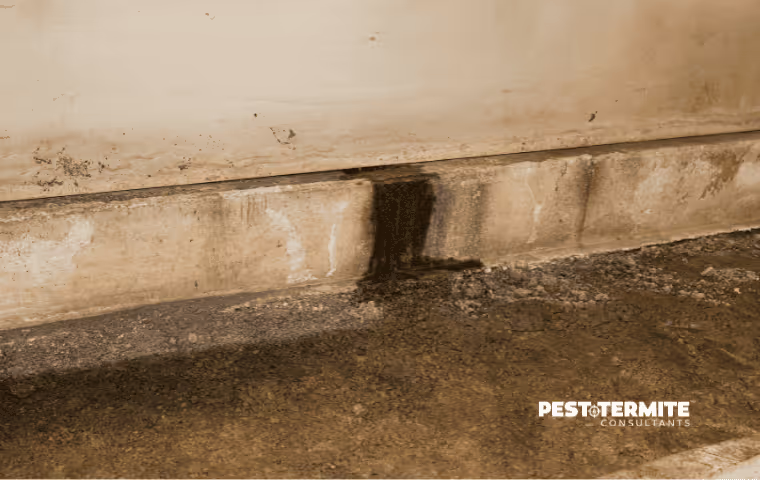
Termites stop swarming in the fall, which is exactly why people stop thinking about them. Feeding is a different story. NC State Extension notes that cold weather often slows termite feeding but does not necessarily stop it, and where a colony is protected, for example beneath a slab, activity may continue year round. North Carolina has at least three native subterranean termite species, and serious damage usually takes three to eight years to develop. It is built quietly, across seasons, including the ones nobody is watching. Ongoing termite control is monitoring as much as treatment.
House mice
A house mouse can pass through an opening larger than a quarter inch. Rats need a little more, over half an inch. That is the whole barrier between a cold night and a nest in your insulation. Fall is when mice start testing the perimeter of your foundation in earnest, and once a population establishes in an attic or crawl space, it breeds through the winter with no interruption. Rodent control in October is exclusion work. In February it is removal, which takes longer and costs more.
Stink bugs and kudzu bugs
Brown marmorated stink bugs begin showing up in houses about late September to October, gathering on sunny walls and slipping in through soffits, attic vents, and window frames. Kudzu bugs do something similar on a larger scale, moving out of kudzu and soybean fields toward nearby structures, and they are noticeably drawn to light colored siding. Neither one damages your home. Both are miserable to have inside by the hundred, and both are far easier to keep out than to remove. Our stink bug control work is built around sealing the building, not chasing what already got in.
Spiders
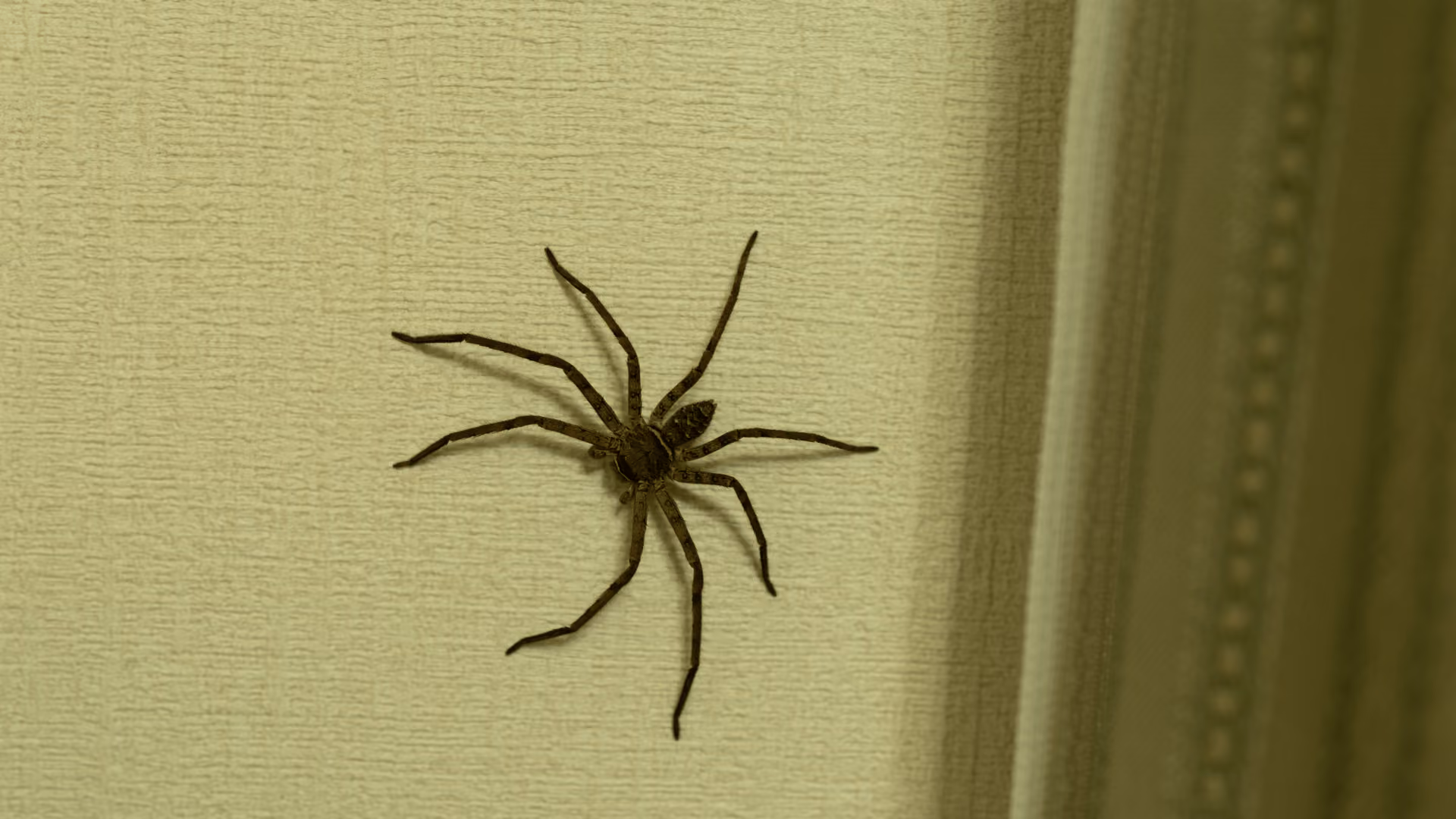
Spiders belong on this list, though not for the reason most articles give. House spiders are indoor species that live inside all year, so they never came in from the cold. The Burke Museum's arachnology collection explains that the seasonal jump in sightings is mature males wandering in search of mates, not spiders fleeing the weather. The useful signal is the count. A lot of spiders in a house means there is enough other insect activity indoors to feed them, which is why spider control works best as part of general service rather than on its own.
Cockroaches
The German cockroach has no seasonal angle at all. According to NC State Extension, the species occurs only near human dwellings and is typically found only indoors. It develops best somewhere around 77 to 86 degrees, which a heated house supplies every day of the winter. So it breeds continuously, year round, whatever the thermometer says outside. A service gap is simply time it gets to work uninterrupted.
Two things you have probably read that are not true
"A spray around the outside of the house handles fall invaders." NC State's fall invader guidance is blunt about this. Exterior surface sprays are rarely effective against stink bugs and kudzu bugs, and sealing the building is what actually works. We agree, which is why fall and winter service leans toward inspection and exclusion rather than more product on the siding.
"A hard freeze resets everything." It doesn't do much. Frost ends mosquito and wasp activity outdoors, and that's real. It does nothing to whatever is already in your crawl space. It also arrives later here than people expect. NC State Extension puts the average first fall freeze at October 30 in Raleigh, November 4 in Durham and Fayetteville, and November 18 in Wilmington. Coastal homeowners in particular are looking at most of November with pests still moving.
Why a service gap costs more than it saves
The argument here is not about scaring you with a number. It is about what the work actually is.
Exclusion is seasonal, and this is the season. Sealing gaps before entry season is straightforward. Removing an established population after it is inside means interior work, more visits, and more product. The cheap version of the job has a window, and the window is now.
The costly pests give the weakest signal. Termites don't swarm in the fall, so nothing announces itself. You could have active feeding under a slab all winter with no visible evidence at all. That is precisely the scenario a service plan exists to catch.
Monitoring is most of the product. A technician walking your crawl space in January is the reason a March problem is small. Skip the winter visits and the first appointment in spring becomes a cleanup instead of a check.
Seven things to do before the first freeze
- Seal any gap wider than a quarter inch. Pack copper mesh or steel wool in first, then finish with a patching compound.
- Add door sweeps to every exterior door. The gap between the door and the threshold should stay under a quarter inch.
- Caulk around window frames, siding seams, and fascia boards. This is the stink bug route.
- Screen your attic, soffit, gable, and crawl space vents, and check the screens already there for tears.
- Move firewood at least 20 feet from the house and keep it off the ground.
- Cut back shrubs and branches touching your siding or roofline. They function as bridges.
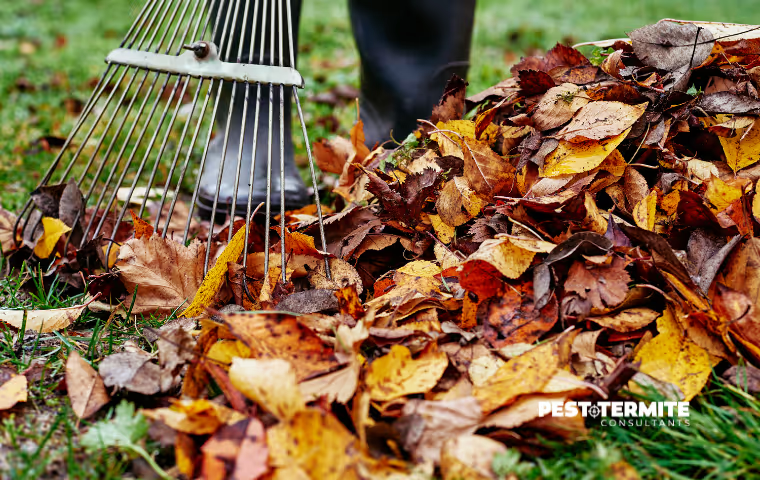
- Clear the gutters. Wet leaf litter and standing water feed most of the list above.
Openings larger than three inches should be backed with quarter inch hardware cloth before you patch them, or whatever you use will get chewed straight through.
What year-round service actually includes
Fall and winter visits look different from summer visits, and they should.
- Entry point inspection around the foundation, doors, vents, and utility penetrations
- Crawl space and attic checks, where cold weather activity concentrates
- Exterior barrier maintenance at the points that matter seasonally
- Moisture attractant reduction, since damp is what holds pests in a crawl space
- Termite monitoring, the part with no visible symptoms to prompt it
Our home pest control plans are built around that seasonal shift. We have written about how it plays out locally in Raleigh and about the crawl space risks in Fayetteville, both of which follow the same pattern.
Fall pest control FAQs
Should I cancel pest control in the fall?
It is the worst season to cancel. Fall is when pests move from your yard into your structure, so a service gap starting in September means nothing is watching your entry points during the weeks that decide what spends the winter inside your walls.
Do pests die in the winter in North Carolina?
Very few of them. Some go dormant outdoors and return in spring. Others move indoors and stay fully active in heated spaces. Cockroaches and protected termite colonies never slow down at all, regardless of the temperature outside.
Are termites active in the fall and winter?
Yes. Swarming stops, feeding often does not. NC State Extension notes that cold weather may slow feeding without stopping it, and that activity can continue year round where a colony is sheltered, such as beneath a slab or inside a heated structure.
Why am I seeing more spiders in the fall?
Not because they came in from the cold. House spiders live indoors year round, and the seasonal increase in sightings is mature males moving around in search of mates. A lot of spiders usually means there are enough other insects indoors to support them.
What does fall pest control actually include?
Mostly inspection and exclusion. Entry point checks, crawl space and attic inspections, sealing and barrier work, moisture reduction, and termite monitoring. It is weighted differently than a summer visit because the pest pressure has moved from your yard to your structure.
Keep the barrier up through the cold months
The fall decision is simpler than it looks. Pests don't check the calendar, and the ones that cost the most are the ones you are least likely to notice on your own. Keeping service active through the winter is what makes spring uneventful.
Call (919) 246-8831 to talk with a technician about what your home needs between now and spring. We serve Raleigh, Durham, Fuquay-Varina, Fayetteville, Wilmington, and North Myrtle Beach.