Why Ants Keep Showing Up After Treatment in Durham Homes
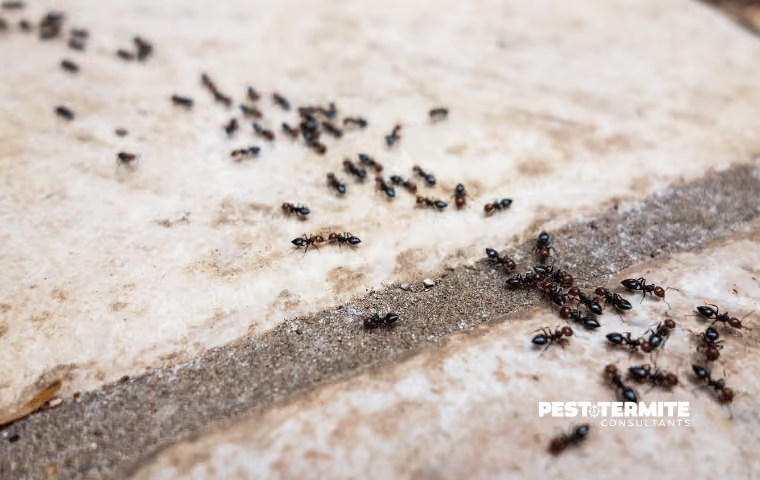
Few things are more frustrating than treating an ant problem only to see the ants return a few days or weeks later. Many homeowners in Durham, NC and the surrounding communities experience this cycle every summer. A store-bought spray or ant trap may seem to solve the problem at first, but before long, another trail appears.
The reason is simple. Most recurring ant problems are not caused by ineffective products alone. They are caused by large ant populations, favorable conditions around the home, and treatment methods that do not address the source of the infestation.
Understanding why ant problems persist after treatment can help homeowners choose a more effective long-term solution.
Why Eliminating Visible Ants Doesn't Eliminate the Colony
When ants appear inside, they represent only a small percentage of the colony. The worker ants homeowners see are responsible for gathering food and water, but the queen and the majority of the colony usually remain hidden.
Ant colonies are commonly located:
- Beneath landscaping
- Under sidewalks
- Inside wall voids
- Around foundations
- Beneath crawlspaces
Killing the visible ants rarely affects the colony itself. As long as the colony remains healthy, it will continue producing new worker ants.
Why Colony Size Matters
During spring and summer, ant colonies grow rapidly.
As colonies expand:
- The colony requires additional food and water
- More worker ants leave to forage
- Multiple trails develop
- New satellite colonies can form
A larger colony means that even if one trail disappears, another may develop somewhere else around the home.
This is why recurring ant problems often become more noticeable during the warmer months.
How Moisture Keeps Ants Coming Back
Water is one of the biggest reasons ants repeatedly enter homes, especially during the summer.
Common moisture sources include:
- Plumbing leaks
- Condensation around pipes
- Damp crawlspaces
- Bathroom fixtures
- Kitchen sinks
- Poor drainage around the foundation
Even if food sources are limited, ants may continue returning because they have found reliable access to water.
This is why reducing moisture is an important part of successful ant prevention in Durham.
Why Quick Sprays Often Provide Only Temporary Relief
Store-bought sprays usually target only the ants homeowners can see.
While they may reduce activity temporarily, DIY ant treatments often:
- Miss the queen
- Leave the colony intact
- Do not address outdoor nesting sites
- Allow new worker ants to replace those that were eliminated
As a result, homeowners often believe the infestation has been solved after treatment when the colony is still active nearby.
Why Protective Barriers Matter
Long-term ant management is about more than eliminating existing ants. It also involves preventing new ants from entering the home.
Protective treatment barriers help:
- Reduce outdoor foraging near the home
- Interrupt common travel routes
- Limit access through entry points
- Lower the likelihood of recurring indoor activity
Without a consistent barrier, ants can continue finding new ways inside.
Why Summer Makes Ant Problems Worse
Summer creates ideal conditions for ant colonies to reach their highest levels of activity. By the time summer is in full swing, many colonies have been growing steadily since early spring and require more food and water to support thousands of worker ants. As a result, foraging activity increases, making indoor ant sightings much more common.
Homes in Durham, Chapel Hill, Bahama, and Morrisville experience several seasonal conditions that contribute to this increase, including:
- Rising temperatures that accelerate colony growth
- Frequent thunderstorms that displace outdoor ants
- Increased humidity that supports colony survival
- Expanding landscapes with abundant food and shelter
- Dry periods between rain that drive ants indoors in search of water
Without addressing both the colony and the conditions attracting ants, summer activity often becomes more persistent as the season progresses.
Why Professional Ant Control Provides Better Long-Term Results
Professional ant control in Durham, NC focuses on the entire infestation rather than simply addressing visible ants.
A comprehensive ant control plan helps:
- Identify colony locations
- Reduce outdoor ant populations
- Address moisture-related conditions
- Establish protective treatment barriers
- Monitor seasonal activity
This approach provides more reliable long-term control than repeated DIY treatments.
FAQs About Ant Control in Durham, NC
Why do ants come back after I spray them?
Most sprays eliminate visible ants but do not reach the underlying colony.
Can one ant colony create multiple trails?
Yes. Large colonies often establish several foraging routes in and around a home.
Does moisture attract ants?
Yes. Water sources are one of the primary reasons ants enter homes and continue returning indoors.
Why are ant problems worse during summer?
Warmer temperatures increase colony growth and foraging activity.
Can sealing cracks stop ant infestations?
Sealing entry points helps, but it does not eliminate existing colonies.
Why is professional ant control more effective?
Professional treatments address the active colony, entry points, and the conditions that attract ants.
Will ants eventually go away on their own?
In most cases, no. Ant colonies continue growing unless the source of the infestation is addressed.
Stop the Cycle of Recurring Ant Problems
If ants keep returning to your Durham home after every DIY treatment, the problem is likely much larger than the visible trail on your kitchen counter or bathroom floor.
Professional ant control provides a more complete solution by targeting the source of the problem and creating long-term protection. With effective ant control for your home, you can reduce recurring activity and enjoy lasting peace of mind throughout the year.
For help eliminating recurring ant problems, call (919) 870-8003 to schedule your ant control service in Durham.