What Fall Rodent Exclusion Looks Like for Coastal SC Homes

October is when mice and rats shift from opportunistic visitors to committed residents. Temperatures along the South Carolina coast haven't dropped to the extremes you'd see further inland, but cooler nights are enough to make the warmth and shelter homes offer more appealing. By the time you notice droppings in the pantry or hear movement overhead, the entry points have usually been in use for weeks.
Rodent exclusion near North Myrtle Beach isn't about setting traps and waiting. It's about understanding how mice and rats get in and closing those routes before a small problem turns into a nested colony. The process is more involved than most homeowners expect, and it starts with the parts of the house that are easiest to overlook.
The Entry Points That Get Missed Most Often
Mice and rats can compress their bodies to squeeze through surprisingly small gaps. That means the inspection list for coastal homes is longer than most people assume, and some of the most common access points aren't obvious unless you're specifically looking for them.
The spots rodents use most frequently include the gaps where utility lines, HVAC conduit, or plumbing pipes pass through exterior walls. Those penetrations are often sealed during construction but develop gaps over time as materials settle and shift. Crawlspace vents with damaged or missing screens are another frequent entry point, especially in older homes where the original mesh has corroded. Gaps at the roofline where fascia boards meet soffit panels allow roof rats to access attics without homeowners realizing.
Garage doors deserve attention too. Most aren't properly sealed at the bottom corners, and a gap that looks minor to a person is an open invitation to a mouse. Door sweeps on side-entry doors often wear down without anyone noticing until there's a reason to look.
What a Rodent Exclusion Assessment Covers
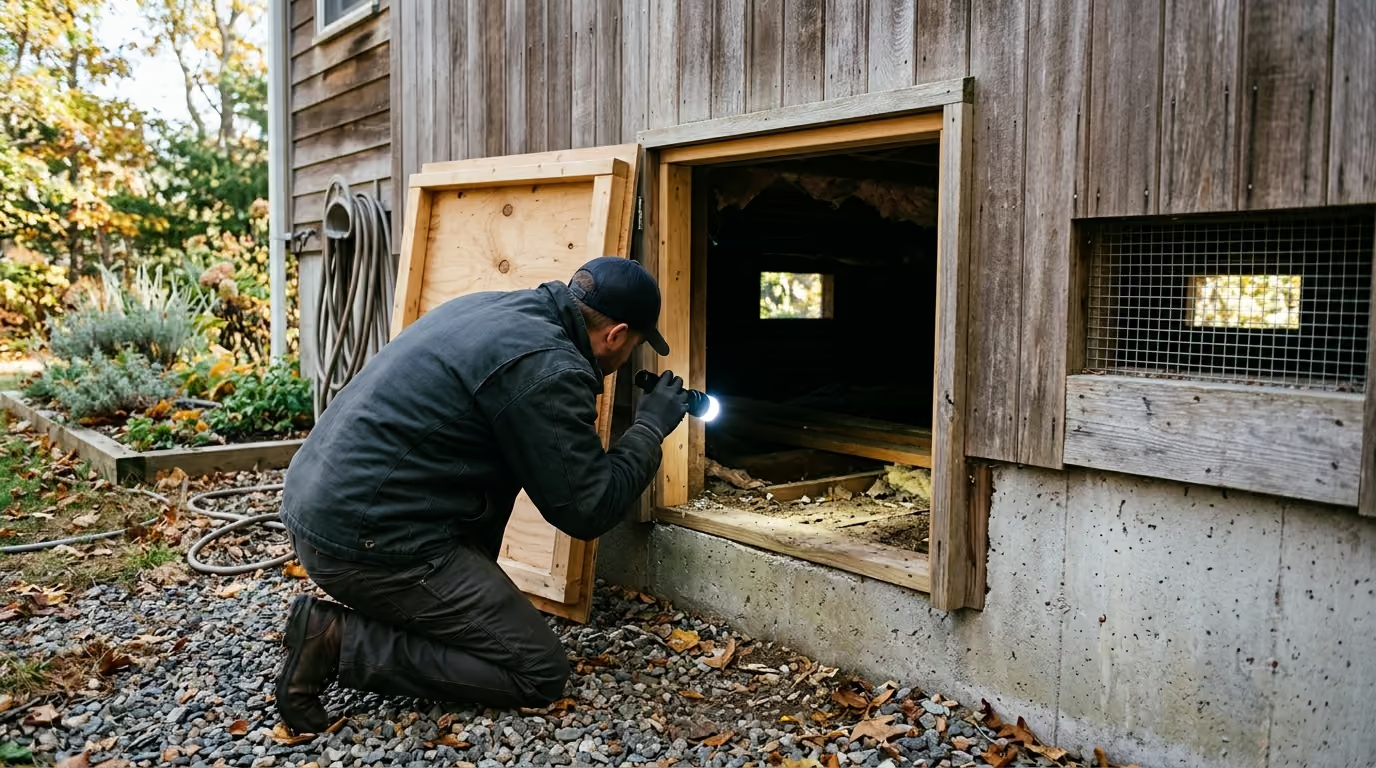
Walking the perimeter with a flashlight is a start, but a thorough rodent exclusion assessment in North Myrtle Beach and surrounding communities needs to go further. During our assessments, we're looking at the foundation line for cracks and gaps, checking the crawlspace entry hatch seal, tracing every utility penetration, and getting into the attic to look for evidence of roof rat activity and the gaps that let them in.
Inside the crawlspace, we're checking for signs of an active infestation: gnaw marks, runways worn in insulation, or fresh droppings that indicate current use rather than old activity. Moisture damage in a crawlspace can also degrade the wood framing enough that new gaps open up, so rodent exclusion and crawlspace condition often end up being related conversations.
The goal isn't just to find one entry point and seal it. A mouse that finds a closed route will search around the home until it finds another. Comprehensive rodent exclusion means mapping out all the vulnerable spots, not just the obvious ones, and addressing them together.
Why Coastal Homes Have More Risk Factors
Homes near the coast deal with humidity and salt air that accelerate the deterioration of building materials. Wood trim around windows and doors can soften faster than it would in drier climates, and caulk around penetrations breaks down sooner. A gap that was sealed two years ago may not be sealed today.
Landscaping habits common in the area also play a role. Dense vegetation close to the foundation gives rodents cover while they search for entry points. Mulch beds that come right up to the siding create both shelter and nesting opportunities near the home. Firewood stacked against the house is a well-known rodent attractant, but stacked lumber, stored equipment, and decorative rock borders can serve the same purpose.
For homeowners in coastal communities throughout the Grand Strand, the combination of mild winters and humid conditions means rodents don't experience the hard population resets like in colder climates. Populations established in the fall can sustain themselves through winter without many dying off, which is part of why getting ahead of entry points in October matters.
FAQs About Rodent Exclusion for Coastal SC Homes
How do I know if rodents are already inside before I schedule an exclusion service?
The clearest signs are droppings, gnaw marks on food packaging or structural material, greasy rub marks along baseboards, and sounds of movement in walls or ceilings at night. You may also notice a musky odor in enclosed spaces like the attic or crawlspace. Finding any of these warning signs warrants an inspection, not just exclusion work, since active rodents inside require a different first step.
Can I seal entry points myself without professional help?
Homeowners can handle some of the simpler fixes, like replacing a worn door sweep or filling a small gap around a pipe with steel wool. The challenge is finding all the entry points, not just the obvious ones. Missing even one means that the problem continues. A professional inspection is worth doing before you invest time in sealing, so you're not closing two gaps while overlooking a third.
What materials are used to seal rodent entry points?
The right material depends on the location and gap size. Steel wool combined with caulk works for small openings around pipes. Hardware cloth or galvanized mesh is used for crawlspace vents and larger openings. Rigid foam or cement-based filler is appropriate for sealing gaps in the foundation. Soft materials like foam backer rod or standard caulk alone won't hold, since rodents can easily gnaw through them.
Does exclusion work if there's already an active infestation?
Exclusion is most effective after any rodents inside have been addressed. Sealing entry points while rodents are still present can trap them inside, leading to odor and secondary pest issues as they die in the walls. The standard approach is to handle any current activity first, confirm it's resolved, and then seal the structure to prevent future entry.
How long does rodent exclusion last before it needs to be revisited?
It depends on the materials used and how the home ages. A solid exclusion using durable materials should hold for several years, but it's worth doing a visual check annually, particularly after any severe weather or renovations that might disturb sealed areas. We recommend having a professional re-inspect every two to three years for older homes or those in areas with higher pest pressure.
Ready to Seal Your Home Before Winter?
If you're in the North Myrtle Beach area, including Calabash, Longs, and Barefoot Landing, October is the right time to get an exclusion assessment done. At Pest & Termite Consultants, we offer rodent control services throughout the coastal Carolinas, and our team can identify the specific vulnerabilities in your home's structure rather than guessing. Reach out to schedule a rodent inspection, and we'll give you a clear picture of what needs to be addressed before colder nights push rodents to start looking harder for ways inside.