Why Ant Activity Starts Shifting Indoors in Early Fall Around Wilmington

Most homeowners expect ants to be a spring and summer problem. It’s easy to assume that things should be settling down by September, but around Wilmington, that's not how it plays out. As temperatures start to dip overnight, ant colonies don't shut down. They shift focus. And that shift usually points straight toward your house.
Fall ant activity in Wilmington follows a pattern we see year after year. The trail you spot crossing your kitchen floor in October didn't start there. It started weeks earlier, when the colony began sensing the seasonal change and started moving toward a warmer, more stable environment. Catching that shift early makes a real difference in how bad the ant problem in your house gets.
Why Ants Start Moving Indoors When Fall Arrives
Ants are extremely sensitive to temperature and moisture changes. As late summer fades and overnight temperatures start dropping, the soil outdoors becomes less hospitable for nesting. The colony reads those cues and responds by foraging more aggressively for food and scouting for new shelter. Your home offers both.
Around Wilmington, this transition often happens before it feels like fall outside. Even when daytime temperatures are still warm in September, the overnight temperature shift is enough to trigger movement. Ants are drawn to moisture and warmth, which means kitchens, bathrooms, and crawlspaces are common first stops. If there's any gap in your foundation, a crack around a pipe, or an unsealed door sweep, scouts will find it.
The species that cause the most trouble in the fall in this area are usually odorous house ants and Argentine ants. Both are highly adaptive, forage in large numbers, and can establish satellite colonies inside walls or under flooring without much visible warning. By the time you're seeing a steady trail, there's usually a well-worn route already established.
What the Signs of Ants Look Like in Wilmington Homes
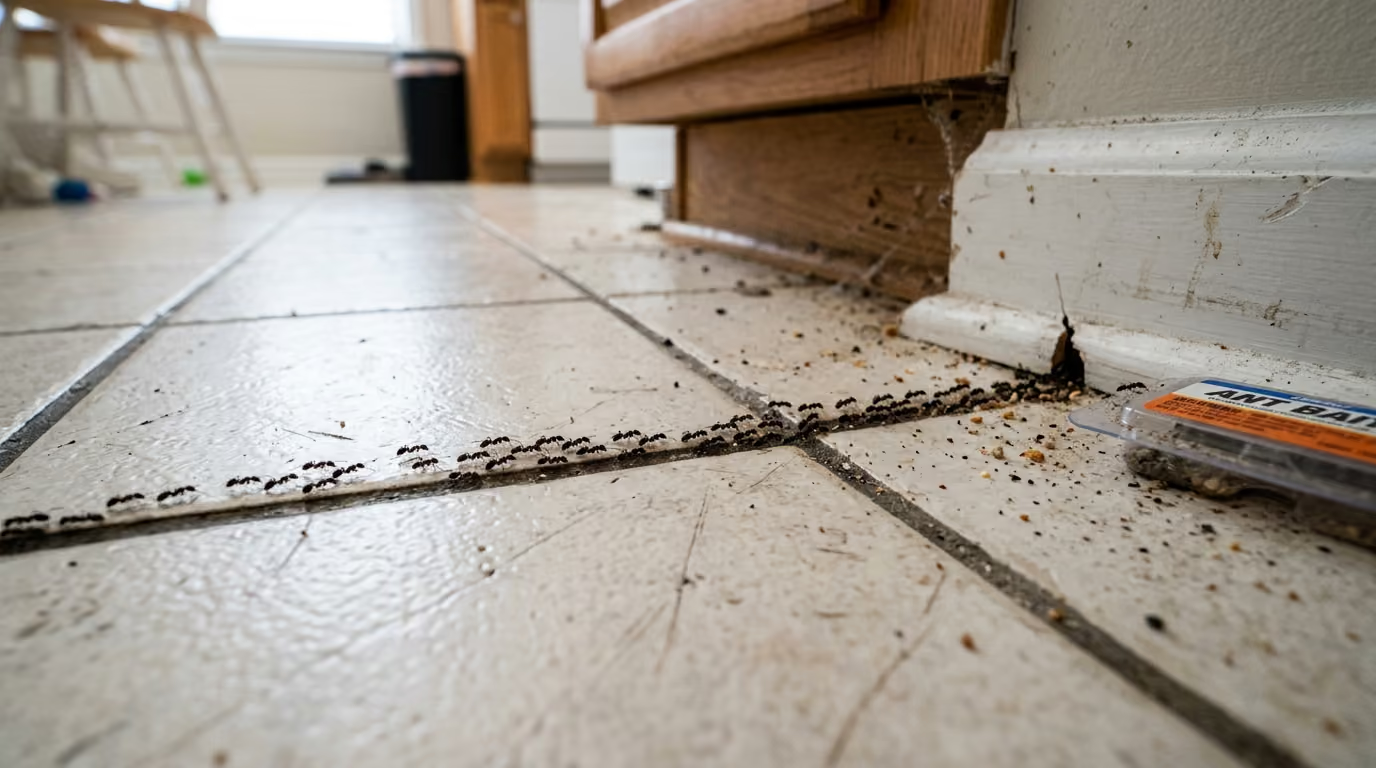
Fall ant activity doesn't always announce itself with a long line of ants marching across the counter. Sometimes the early signs are subtler: a few scouts near the sink, small clusters around the base of a cabinet, or ants appearing in a bathroom that didn't have them before. Those scattered individuals are usually foragers mapping a path, not occasional visitors.
Pay attention near moisture sources first. Wilmington's humidity stays relatively high even into fall, and ants gravitate toward any area where condensation collects, pipes run, or wood has absorbed moisture over the summer. Crawlspaces are a frequent entry point because they stay warmer than outside and are often connected to the inside of the home through gaps around plumbing or the subfloor. Homes with pier-and-beam construction or older crawlspace setups tend to see more of this kind of entry.
If you're finding ants in the same spots repeatedly, even after cleaning and wiping down surfaces, that's a reliable sign that there's a trail established somewhere nearby. The pheromone path those scouts leave behind keeps drawing more ants back even after the original foragers are gone.
Why Early Fall Is the Right Time to Act
Waiting to see if the problem gets worse as the season progresses is a common mistake. By late October, ant colonies that started moving in September have often already established themselves well enough indoors that getting rid of them takes significantly more effort. Treating in early fall, before indoor populations grow and the colony fully relocates, is much more straightforward.
Exterior treatment is a big part of this. Targeting the perimeter of your home while ants are still actively foraging from outside addresses the problem at its source rather than chasing down individual trails inside. Baiting programs work well in the fall because foragers are actively feeding to support the colony through the winter, which means they carry treated bait back to the nest more reliably than during the summer when food sources are abundant elsewhere.
This is also a good time to address the conditions that invite ants in the first place. Mulch piled against your foundation, wood debris in contact with the soil, and leaf accumulation around the base of your house all create conditions that attract ants. Addressing these attractants before temperatures drop limits how much pressure you're dealing with once cold weather fully settles in. Our Wilmington service team handles fall ant control treatments as a regular part of seasonal pest management for homeowners in this area.
FAQs About Fall Ant Activity in Wilmington
Do ants actually survive inside walls during winter?
Yes. Many ant species can overwinter inside wall voids, beneath flooring, or in crawlspaces where temperatures stay above freezing. They slow down but don't die off, and they'll resume activity quickly during any warm spell.
Why are ants showing up in my bathroom in September?
Bathrooms offer two things ants are actively looking for in early fall: moisture and warmth. Pipes, condensation, and the consistent temperature near the water heater or crawlspace access make bathrooms a common entry and foraging point.
Will ants go away on their own once it gets cold?
If ants have already found a way inside, they are unlikely to leave on their own. Cold temperatures outside make your home more attractive, not less. Ant colonies that establish inside in the fall tend to persist through winter and expand again in the spring.
Is it worth treating for ants in the fall if I already treated in the summer?
Yes. Summer and fall treatments serve different purposes. Summer treatments address outdoor pressure and active foraging. Fall treatments target the shift indoors and help cut off entry before ant colonies relocate. One doesn't replace the other.
What attracts ants to my kitchen in the fall?
Food residue, crumbs, and any exposed sugars or proteins are the main draw. This time of year, foragers are feeding more intensively to prepare the colony for winter, so kitchens become prime targets. Storing food in sealed containers and cleaning floors, counters, and dishes regularly helps to reduce this attractant significantly.
Get Ahead of Fall Ant Problems
The shift in ant behavior that happens each September in Wilmington is predictable, which means you don't have to wait until trails appear inside to do something about it. Early fall is the right window to treat your home, address entry points, and put a bait program in place before colonies settle in for the season.
If you're already seeing ants inside, or you want to start ant control for your home before ants have the chance to move indoors, reach out to Pest & Termite Consultants to schedule a fall ant treatment. We serve Wilmington, Hampstead, Castle Hayne, Ogden, and the surrounding communities.