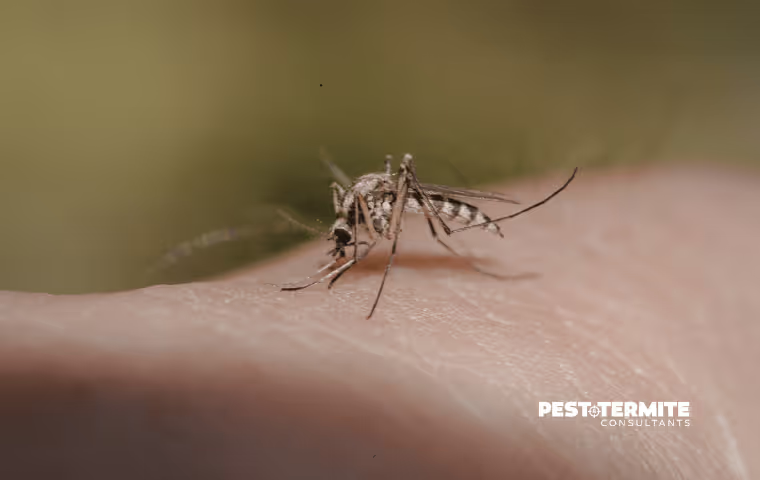
Why Mosquito Activity Can Still Be High in September Near Wilmington

Most homeowners view September as the end of mosquito season. The thinking goes that summer is over, temperatures are starting to dip, and the problem is winding down on its own. Around Wilmington, that's rarely how it actually plays out. September still has mild nights and enough humidity to keep mosquito pressure uncomfortable, and homeowners who stop treatment too early often find that out the hard way. If you've been managing the mosquito populations in your yard through the summer, now is not the time to let up.
Why September Mosquito Activity Near Wilmington Stays Stronger Than Expected
The coastal climate around Wilmington doesn't cool down the way inland areas do. Temperatures through much of September regularly stay in the low-to-mid 80s during the day, and nights stay warm enough that mosquitoes remain active well after dark. That matters because mosquitoes don't disappear when the calendar page turns. They respond to temperature and standing water, and both are still favorable here through most of the month.
Rainfall patterns make it worse. September is still well within the Atlantic hurricane and tropical storm season, which means heavy rain events are common. Even a tropical system that doesn't make direct landfall can drop several inches of rain, which refills every low spot, clogged gutter, and neglected container in a yard. A fresh round of standing water in mid-September is all it takes to produce another generation of mosquitoes before the month is out.
Neighborhoods near Monkey Junction and Porters Neck that have tree canopy and shaded ground tend to hold moisture longer. Those areas stay cooler under the leaves, which actually extends the period mosquitoes can breed and shelter comfortably. Shaded yards aren't a reprieve from mosquito pressure in the fall. They often have mosquitoes longer.
The Late-Season Breeding Cycle Homeowners Tend to Miss
Mosquitoes breed fast and can grow from eggs to biting adults in roughly a week or two depending on the temperature. In September, the math works against homeowners who assume the season is winding down. Fresh rain on September 5th can produce a new wave of biting adults by the 15th or 20th. That's prime time for outdoor gatherings, fall yard work, and kids playing outside after school, which means the timing of late-season mosquito populations tends to land exactly when people are spending more time outdoors again after the hottest stretch of summer.
This is especially relevant for properties that back up to tidal areas, retention ponds, or wooded lots near the coast. Saltmarsh mosquitoes, which are especially common near Hampstead and Leland, can travel farther from their breeding sites than most people realize. You don't have to have standing water in your own yard to deal with the results of mosquito breeding. If water sources are nearby, mosquito pressure can still reach your property.
The answer to stopping a mosquito resurgence this time of year isn't waiting for a problem to reappear. It's maintaining mosquito treatments through September so the breeding population in your immediate area stays suppressed rather than recovering before mosquito season is truly over.
What Effective Fall Mosquito Control Looks Like
Mosquito control in September isn't dramatically different from what works in July, but the application timing matters. Barrier spray treatments target resting sites, which are the shaded, humid spots where mosquitoes spend most of the day. Foliage along fence lines, ground cover beds, the undersides of deck boards, and shrubs close to the house are all common resting spots. A treatment applied to these areas in early September extends protection through the next few weeks, covering the gap between summer service and the point when temperatures actually drop enough to break the cycle.
Standing water reduction remains part of the picture, too. Gutters that collected leaves in late August, planters without drainage, and anything holding rainwater after a storm should be cleared out. These aren't just summer tasks. Any container that holds water for more than a few days in September can still support mosquito breeding.
Our mosquito control services in Wilmington follow a schedule built around the mosquito pressure specific to the area, not an arbitrary cutoff date. That typically means carrying service into September rather than stopping at Labor Day.
Early Fall Mosquito Control FAQs in Wilmington
When do mosquitoes stop being active near Wilmington?
Activity drops significantly when overnight temperatures consistently fall below 50 degrees Fahrenheit, because mosquitoes become less active and eventually stop breeding and feeding at that threshold. In the Wilmington area, that typically doesn't happen until late October or early November. September is generally still well within the active season.
Is it worth scheduling mosquito treatment in September if I didn't have it all summer?
Yes. A treatment applied in September can still meaningfully reduce the biting population in your yard for the remaining weeks of mosquito season, particularly if you have outdoor events planned or kids spending time outside. It won't fix a summer's worth of unchecked breeding all at once, but it does give immediate relief and helps suppress the population through the fall.
Does the end of hurricane season mean fewer mosquitoes near the coast?
Not directly. The Atlantic hurricane season officially runs through November 30, and even after major storms become less frequent, regular fall rainfall is enough to create breeding conditions. The end of named storm season doesn't correspond with an end to mosquito pressure.
Can mosquitoes breed in my yard even if I don't see standing water?
Yes. They can breed in surprisingly small amounts of water, including bottle caps, leaf pockets in gutters, and low spots in tarps. A thorough check of your yard is the best way to catch these, and it's worth doing after any rainstorm through September. If your property has shaded, consistently damp areas, those should be the priority spots to inspect, too.
What's the difference between fall mosquito control and what's done in summer?
The treatments themselves are largely the same. The difference is the scheduling and the emphasis on timing relative to when nighttime temperatures start to drop. Fall applications are often spaced with more attention to weather windows since cooler temps slow both mosquito activity and the pace of re-infestation. Your technician can advise on what schedule fits your property's actual mosquito control needs in September.
Don't Stop Mosquito Control Too Soon
Mosquito activity in Wilmington and the surrounding communities follows the weather, not the calendar. September still brings the warmth, humidity, and rain that keep mosquitoes active, and maintaining treatment until mosquito season naturally dies down means you can comfortably enjoy your yard and outdoor spaces this fall. If you want to talk through what fall mosquito control looks like for your property, get in touch with our team, and we'll walk you through your options.