Why Rodents Begin Moving Into Durham Homes Before Cold Weather Arrives
Mice and rats don't wait for a cold snap to start looking for a way inside. In Durham, rodent activity typically begins shifting toward homes in September, well before dropping temperatures make outdoor life uncomfortable. By the time you notice droppings in your pantry or start hearing something moving in your walls, the situation has usually been building for weeks. Understanding why rodents move when they do, and what draws them to specific homes, makes it easier to get ahead of the problem before mice or rats settle in.
Why Early Fall Matters More for Rodent Control in Durham Than Homeowners Expect
The common assumption is that rodents start looking for shelter once it gets cold. The reality is that food availability drives the timing more than temperature does. By late summer, outdoor food sources like seeds, garden produce, and standing compost start declining. Rodent populations that expanded through spring and summer are now larger and competing for the same shrinking supply. That pressure pushes rodents toward homes where food is predictable and reliable.
Durham's mix of older neighborhoods, wooded lots, and established tree canopy near subdivisions like Northgate and around the Duke Forest corridor gives rodents easy movement paths toward residential areas. They're not crossing an open field. They're moving through yards, along fence lines, and under decks, testing entry points as they go. September is when that scouting behavior intensifies, not because of the calendar, but because the environmental conditions line up that way most years.
What Rodents Are Looking For Before They Come Inside
Shelter and food are the obvious answers, but the specifics matter if you're trying to make your home a less appealing target. Mice can squeeze through a gap roughly the diameter of a pencil. Rats need slightly more space, but not much. Both are drawn to warm voids, crawlspaces, wall cavities, attic insulation, and the spaces behind kitchen appliances.
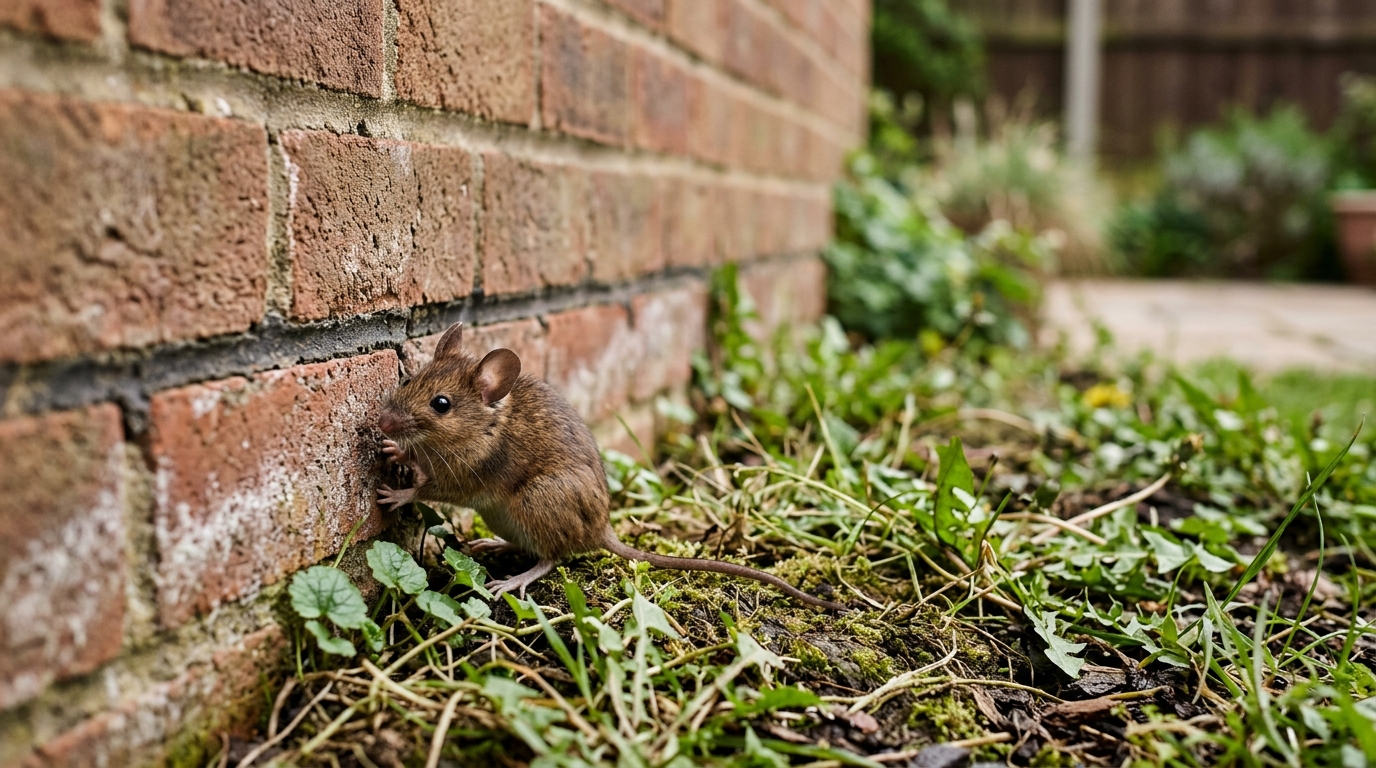
Outside, they look for cover before they find an entry point. Common examples include dense ivy, stacked firewood against the house, and cluttered storage beneath a deck. These give rodents a staging area. Once they feel safe near the structure, they explore the foundation, follow utility lines, and test any openings where pipes or conduits enter the home. Gaps around older HVAC penetrations are particularly common in Durham homes built before the 1990s, where settling has created small separations that weren't there originally.
Neighborhoods near Chapel Hill and Hillsborough, where tree cover is heavy and lots run larger, tend to see earlier rodent pressure for this reason. There's more habitat immediately adjacent to homes, so the migration distance is shorter.
The Difference Between a Mouse Scouting and a Mouse That Has Moved In
Early detection matters because a single rodent is easier to address than an established nest. The signs of early rodent activity are often subtle: a faint musty odor near a baseboard, a small smear mark along a wall where fur and grease transfer onto paint, or chew marks on a bag of pet food that could be dismissed as damaged packaging.
By the time droppings accumulate or gnawed wiring becomes noticeable, you're likely dealing with mice or rats that have been residents for several weeks. Rodents breed quickly. House mice can produce a new litter roughly every three weeks under ideal conditions. A couple of mice entering your home in September can represent a much larger problem by November if nothing intercepts them.
The practical implication is that waiting for obvious signs means waiting too long. If you're in a wooded area, near a creek, or in an older home in central Durham, Bahama, or the Hillsborough corridors, treating September as rodent prevention season rather than rodent response season is the more useful mindset.
FAQs About Fall Rodent Control in Durham
How do I know if I have mice or rats?
Droppings are usually the clearest indicator. Mouse droppings are small, roughly the size and shape of a grain of rice, with pointed ends. Rat droppings are noticeably larger and blunt-ended. Gnaw marks are another sign that differ in size depending on the rodent species. Rats also tend to leave grease marks along baseboards and walls from repeated travel along the same paths.
Are rodents dangerous beyond the nuisance of having them inside?
Yes. The CDC links rodents to the spread of several diseases, both through direct contact with droppings and urine and through the parasites they carry. Beyond health concerns, rodents gnaw on wiring, which is a documented cause of house fires, and they damage insulation by nesting in it.
Can I handle a rodent problem on my own?
Snap traps and bait stations can reduce activity, but they don't address how rodents are getting inside. Without sealing entry points, you're managing a symptom rather than the cause. A licensed technician can identify access points that aren't obvious and apply exclusion methods that make the fix last.
Why do rodents keep coming back even after I've dealt with them before?
If entry points weren't sealed, new mice and rats will follow the same scent trails left by previous ones. Rodents use urine to mark paths, and those markers persist and attract others inside. A treatment that only removes rodents without addressing access points is likely to need repeating.
When is the best time to call a professional about rodents?
Before you see them inside, if possible. September and early October are the window when early intervention is most effective in the Durham area. Once rodents are established indoors, the process is more involved. If you're already noticing signs, don't wait.
Getting Ahead of Fall Rodent Activity in Durham
The homeowners who have the easiest time with rodents in the winter are the ones who don’t wait for a problem to show up. A quick check of your foundation, utility penetrations, and crawlspace entry points in early fall takes much less time than dealing with an infestation in November.
If you think you may be dealing with rodents or want to start rodent control services for your Durham home now as a precaution, we can help. Our team can inspect your home to give you a clear picture of what you’re dealing with, remove any rodents present, and address any potential entry points for rodent protection that lasts.
Pest & Termite Consultants serves Durham and the surrounding areas, including Chapel Hill, Hillsborough, and Bahama. If you're concerned about fall rodent pressure, reach out to our team to schedule an inspection today.