Why Termite Monitoring Still Matters After Peak Swarm Season

Spring swarm season often gets most of the attention when it comes to termites, and understandably so. Seeing winged termites pour out of the ground or along a windowsill is hard to ignore. But once the swarms stop, it's easy to assume the threat has passed. It hasn't. Termite colonies keep feeding year-round, and the months after swarming are actually when colonies are doing some of their most sustained damage. That's why termite monitoring in Wilmington stays relevant well past spring, and why homeowners near the coast who let their guard down in summer often find bigger problems by fall.
Why Termite Colonies Stay Active Long After Swarming Ends
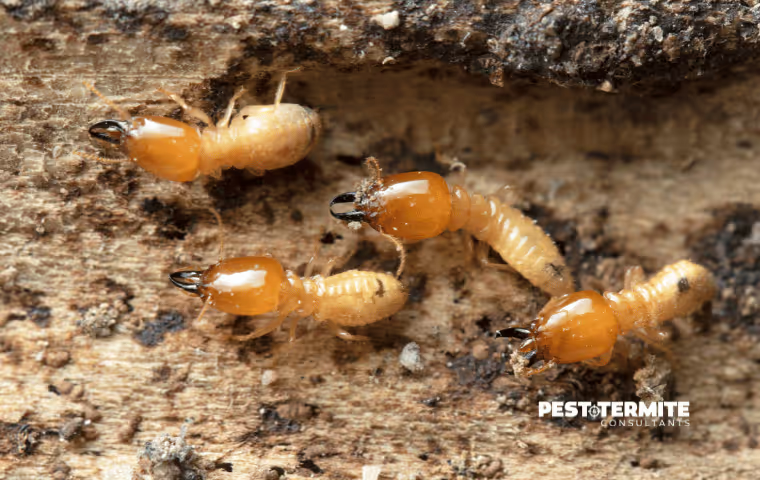
Swarming is a reproductive event, not the colony's main activity. When alates (the winged termites) fly and disperse, the parent colony doesn't slow down or shut off. Workers continue feeding, tunneling, and expanding their territory through the summer and into fall. In Wilmington's climate, where temperatures stay warm well into October and humidity rarely drops, there's no natural off-season forcing termite activity to pause.
Eastern subterranean termites, the most common species in this region, can remain active when soil temperatures stay above roughly 50 degrees Fahrenheit. Along the coast, that window covers most of the year. So the idea that termite season has an end date tied to swarm season is one of the more persistent and costly misconceptions homeowners carry. The swarm was a signal that a colony was mature. A large, well-established colony will not stop eating wood just because spring has ended.
What Monitoring Stations Actually Catch That Spot Inspections Miss
A visual inspection can find active termite damage, mud tubes, or signs of moisture intrusion that make a structure attractive to termites. What it can't do is tell you where termite pressure is building before visible damage appears. That's the job of a monitoring system.
In-ground termite monitoring stations are placed around a structure's perimeter and checked on a schedule. When termites intercept the bait matrix inside a station, it shows up during the inspection, often weeks or months before any structural feeding would have been visible. For homes in Wilmington, Wrightsville Beach, and Kure Beach, where crawl space construction and older wood framing are both common, that early detection window can be the difference between a minor treatment and a repair bill that can cost thousands of dollars.
Post-swarm summer monitoring matters because termite populations peak in late spring and early summer. Larger colonies have more workers foraging more aggressively, which increases the chance of a station intercepting activity. Letting monitoring lapse during this period is choosing not to look at exactly the time when there's the most to find.
Coastal Conditions Give Termites More to Work With
Wilmington's combination of heat, humidity, and frequent rain keeps soil moisture high throughout the summer, which is precisely what subterranean termites need to travel. They can't cross dry soil without desiccating, so sustained moisture essentially extends their foraging range. Properties in Wilmington and the surrounding coastal communities also contend with salt-air humidity that accelerates wood decay, making structures more accessible to termites as the season progresses.
Homes with crawl spaces are at even higher risk and worth watching during the summer months. Crawl spaces trap humidity, and any wood-to-soil contact, pier bases, form boards left from old construction, or even stored lumber, becomes a potential entry point. A monitoring program that covers these exposures gives you an accurate picture of what's happening beneath your home when the ground is at its warmest and most active.
FAQs About Termite Monitoring for Coastal NC Homes
Is there actually a slow season for termites in Wilmington?
Not in any meaningful sense. Coastal North Carolina's mild winters mean termite activity tapers only slightly in the coldest months, and by late February, it typically picks back up. Summer through early fall is one of the more active periods for termites, not a break from activity.
My home was treated a few years ago. Do I still need monitoring?
Yes. Liquid treatments and bait applications have effective windows that vary by product and application conditions. Monitoring stations catch new termite pressure that develops after an initial treatment, which is exactly how re-treatment decisions get made before damage occurs rather than after it’s too late.
How often should monitoring stations be inspected?
Typically every three to six months, with some programs running quarterly checks during peak activity periods. Your specific inspection schedule should account for your home's construction type, prior termite history, and how close you are to high-moisture environments like the coast or wetlands.
Can I monitor for termites myself with store-bought kits?
Consumer termite monitoring kits exist, but they don't include the bait matrix used in professional systems, and they won't trigger a treatment response if activity is found. Professional monitoring is valuable specifically because it connects detection to action, with a licensed technician making the call and applying the appropriate product.
What should I do if I think termites are already active in my home?
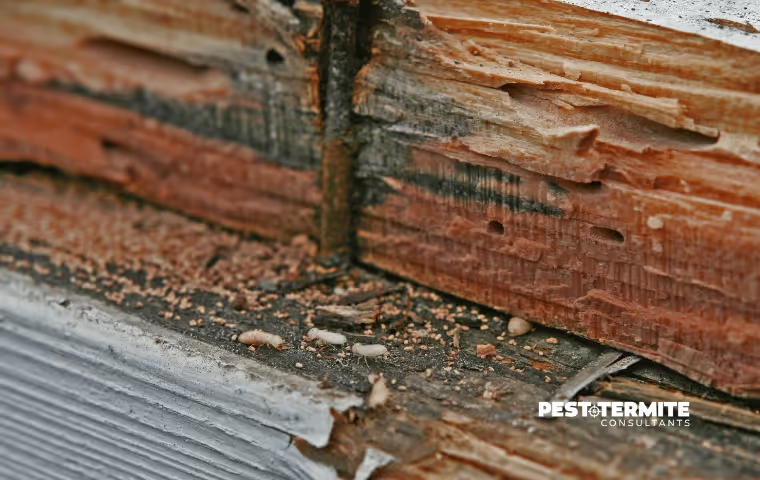
Don't wait if you suspect termite activity. Signs like mud tubes along your foundation, hollow-sounding wood, or frass near baseboards mean a colony is already feeding. Contact Pest & Termite Consultants directly for a professional termite inspection so we can assess what's happening and get the right treatment in place quickly.
Don't Let Your Termite Protection Lapse After Swarm Season Ends
Termite control in Wilmington isn't a spring-only concern, and the months after swarm season are no time to let coverage lapse. If your home doesn't have an active monitoring plan or if it's been a while since your last inspection, reach out to our team, and we'll get a visit scheduled. The colonies outside your home aren't taking a break, and neither should your termite protection.